-
Mert Bayazitoglu
- November 7, 2025
HVAC, Plumbing, & Electrical: Does Direct Mail Marketing Actually Work?
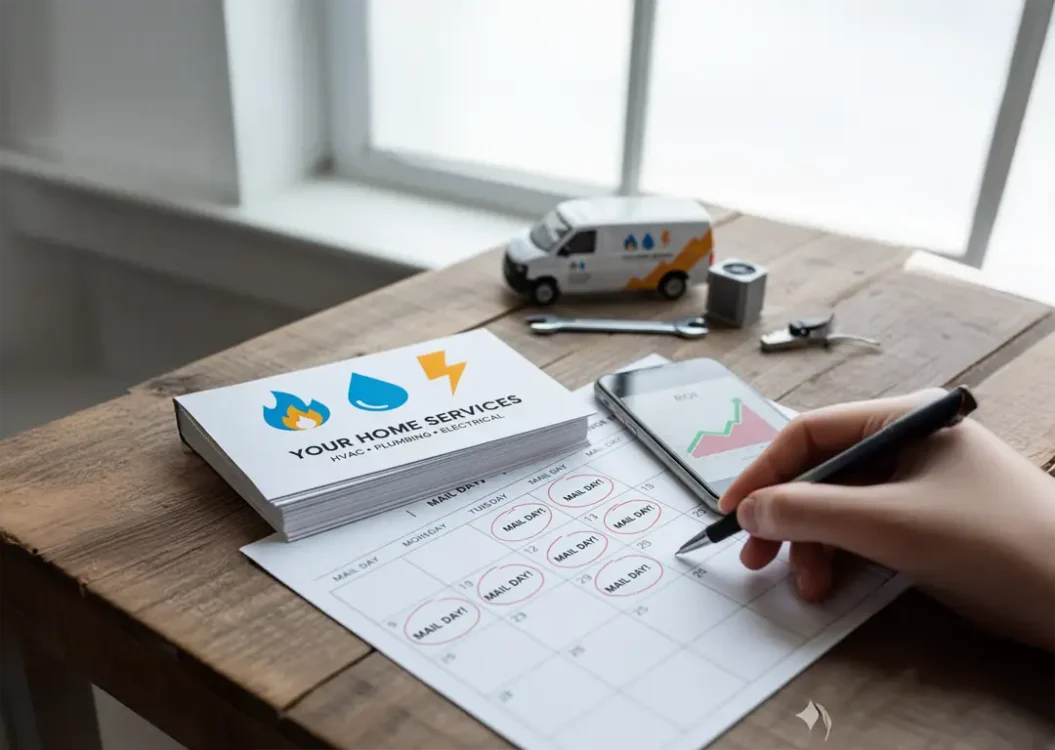
You run a great local service company, and you’re thinking about starting a direct mail marketing strategy for your HVAC, plumbing, or electrical business. That’s a smart idea for HVAC marketing or plumbing advertising! But before you spend a dollar on stamps and printing, you need to understand one simple rule about getting customers from the mail. The most important question is: Are you truly ready to send mail more than once? Why a “One-and-Done” Postcard Campaign Fails Your Service Business We talk to owners of HVAC, plumbing, and electrical companies all the time who say, “I just want to send one postcard to see if it works. If I get calls, I’ll send more later.” Here’s the honest truth: Sending only one piece of direct mail is almost always a waste of your money. People don’t call you right away just because they saw your name once. They need to see your company’s name several times before they trust you enough to call you for an important repair or service. A single flyer is easy to ignore, forget, or toss out with the junk mail. If you try it once and don’t get calls, you’ll walk away thinking postcard marketing “doesn’t work,” when the real problem was the plan! The Secret to Success for Direct Mail Marketing HVAC Plumbing Electrical. The only way to make direct mail marketing successful for your business is through repetition and consistency. You need a plan that ensures local homeowners see your company’s name again and again. Why does this work so well for home service businesses? They Need to Remember You: When their furnace breaks, the toilet overflows, or they need an electrician, you want your company to be the first name they remember. Seeing your mail multiple times builds that memory and trust. You Hit Perfect Timing: Most people don’t need a plumber right now. But if you send mail four or six times over a year, you drastically increase the chances that one of your postcards will land in their hands the exact week they do need your service. To see real results and make direct mail profitable, you should plan to send something to the same potential customers at least 3 times, but ideally 6 times or more over a set period. Postcard Marketing: Tips for Stand-Out Design & Simple Messaging It’s not just about how often you mail; it’s also about what you mail and what you say. 1. Change Up the Look Don’t send the same boring piece every time. Keep it fresh by using different kinds of mail: Send a simple paper postcard with a big discount. Send a magnet that they can stick right on the fridge. (Now your number is always visible!) Send a plastic postcard that feels important and is harder to throw away. Using a mix ensures your ads get noticed and aren’t immediately mistaken for the same old junk mail. 2. Keep Your Message Simple When you write your ad, remember that most homeowners aren’t experts. If you use confusing technical words, they might just stop reading. Don’t talk about specs or ratings. Do talk about simple benefits: Focus on what they care about, like “Save Money on Your Electric Bill,” “Fast, Friendly Emergency Plumbing,” or “Reliable HVAC Service.” The clearer your message and the more you focus on helping them, the more calls you’ll get. The Final Verdict on Direct Mail Postcards are a fantastic tool for your HVAC, Plumbing, or Electrical business—but only if you commit to sending them consistently. If you are ready to put a simple, multi-touch plan on the calendar to mail the same homes 3 to 6 times, this direct mail marketing strategy will be a great investment. If you only plan to try it once, save your money!
Read More
-
- October 24, 2025
Simple Guide to Email Marketing: A 101 for Beginners
Looking for a simple guide to email marketing? If you’ve heard the term “email marketing” but just picture those spammy, all-caps emails you delete every morning, let’s clear the air. Real email marketing isn’t spam. It’s not about shouting at strangers. At its best, email marketing is simply a way to build a relationship with people who actually want to hear from you. It’s like sending a personal letter or a helpful note to a friend, not a random flyer stuffed in their mailbox. If you run a small business, a blog, or a creative project, your email list can become your most valuable asset. But how do you start without feeling salesy or overwhelmed? Welcome to the simple, no-jargon guide to email marketing. Why Bother? (Is Email Even Still a Thing?) Yes! In a world of ever-changing social media algorithms, email is the one thing you truly own. Think of it this way: your social media followers are like “rented” land. The platform (Facebook, Instagram, TikTok) can change the rules, or even shut down, and your audience is gone. Your email list is your “owned” home. You have a direct line to your audience, forever. Here are the three biggest “wins” of email marketing: You Own Your Audience: As mentioned, no algorithm can take your list away from you. It’s Personal: You can segment your audience and send messages to “Jane” about her interest in gardening, instead of just shouting “Hey everyone!” into the void. This personalization builds incredible trust. Amazing ROI (Return on Investment): You don’t need to be a finance guru to understand this. Studies consistently show that for every $1 spent on email marketing, the average return is over $36 (as reported by sources like Litmus). It’s one of the most effective ways to connect with people and grow your business. A 5-Step Simple Guide to Email Marketing Forget the complex flowcharts for now. Here is the entire process in five simple steps. Step 1: Build Your “Guest List” (The Right Way) Before you can send emails, you need people to send them to. The golden rule here is permission. Whatever you do, do not buy an email list. It’s the fastest way to get marked as spam and destroy your reputation. You only want to email people who have asked to hear from you. How do you get them to ask? A Simple Signup Form: Place a form on your website or blog that says, “Join our newsletter for weekly tips.” The “Lead Magnet”: This is the most effective method. A lead magnet is just a simple “freebie” you offer in exchange for an email address. A coffee shop could offer a “10% off your next order” coupon. A blogger could offer a free PDF checklist like “5 Things to Do Before Publishing a Blog Post.” A consultant could offer a “10-minute case study.” Step 2: Choose Your “Mail Carrier” (Your Email Tool) You can’t send thousands of emails from your personal Gmail or Outlook account. You’ll get shut down for spam instantly. You need an Email Service Provider (ESP). Think of this as your professional mail carrier that handles all the heavy lifting for you. It helps you design emails, manage your list, and stay legal. Choosing the right platform is a critical first step. Do you need a simple tool for newsletters, or a powerful engine that can handle complex e-commerce automations? The platform you choose today will determine what you’re capable of tomorrow. This strategic choice is one of the most important first steps we take with our clients. We match your specific business goals to the right technology, ensuring you have a powerful foundation without paying for features you don’t need. Step 3: Write Your First “Letter” (Crafting Your Email) This is the fun part. You don’t need to be a professional copywriter. Just be human. A good email has three parts: A Clear, Honest Subject Line: This is the “envelope.” It’s the one thing that determines if someone opens your email. Don’t use trickery or “clickbait.” Bad Subject: URGENT: OPEN NOW!!! Good Subject: A 5-minute tip for a better-looking lawn A Valuable Body: This is the “letter.” Write like you’re talking to one person. Use short sentences and short paragraphs. Your goal is to provide value. Give them a tip, share an interesting story, or link to a helpful resource. A Single Call-to-Action (CTA): This is the “P.S.” at the end. Tell them the one thing you want them to do next. Don’t give them 10 choices. “Read the full blog post here” “Watch the new video” “Grab the 10% discount” Step 4: Send and Automate (The Magic Part) You generally have two “types” of emails you can send: Campaigns (or Newsletters): These are one-off emails you write and send manually. For example, your weekly newsletter, a special announcement, or a holiday sale. Automations: These are emails that send automatically based on a trigger. The most important one for you to set up is a “Welcome Email.” This is an email that automatically goes out to every new person the moment they subscribe. It confirms their subscription, delivers their freebie (if you offered one), and welcomes them to your community. This is also the part where true email marketing magic happens. A “welcome” email can become a 5-part “nurture sequence” that builds trust and guides a new lead toward their first purchase. Step 5: See Who’s Reading (A Quick Peek at Numbers) Your email tool will give you a report after you send an email. You’ll see a lot of numbers, but you only need to care about two to start: Open Rate: What percentage of people opened your email? This tells you how good your subject line was. Click-Through Rate (CTR): Of the people who opened it, what percentage clicked the link inside? This tells you how valuable your email content was. Understanding these numbers is just step one. Knowing how to improve them—by A/B testing subject lines,
Read More