
-
Mert Bayazitoglu
- October 24, 2025
5 Marketing Traps Almost Every New Business Owner Falls Into (And How to Climb Out)
Let’s be real: running your own business is a wild juggling act. You’re the CEO, the product designer, the accountant, and—yep—the entire marketing department. With a to-do list that never ends, it’s so easy to fall into common marketing traps that burn you out and waste precious money. But here’s the good news: you’re not alone, and these mistakes are completely fixable. Marketing isn’t about doing everything at once. It’s about doing the right things for your small business marketing, one step at a time. Does any of this sound familiar? Let’s walk through five common hurdles and, more importantly, how to get over them. Marketing Trap #1: Trying to Sell to “Everyone” When you’ve poured your heart into a product or service, you genuinely believe everyone could benefit from it. I get it! But the hard truth is, when you try to talk to everyone, your message becomes so general that it just gets lost in the noise. It doesn’t connect with anyone. The Fix: Find Your People Stop trying to be the “best” choice for everybody and start being the “only” choice for a specific group. Think about your absolute favorite customer. The one you wish you could clone. Now, let’s build a picture of them: How old are they? Where do they live? What do they really care about? What’s a specific, nagging problem they have that you can solve? Where do they “live” online? (Is it a specific Facebook group? LinkedIn? Instagram?) Once you have this person in your head, just write for them. Your marketing will instantly feel more personal and, in turn, become way more effective. Marketing Trap #2: “Doing Marketing” Without a Goal Ever get to the end of the day, realize you posted on social media, but have no idea if it… did anything? That’s what I call “check-the-box” marketing, and it’s one of the most common marketing traps for new business owners. You’re busy, but you’re not necessarily being effective. How can you know if you’re winning if you never defined what winning looks like? The Fix: Know Your “Why” with SMART Goals Before you spend another minute on a post or an ad, take a breath and ask, “What am I trying to achieve right now?” A simple way to do this is with SMART goals. It sounds “business-y,” but it’s really just common sense: Specific: “I want to grow my email list.” (Clearer than “grow my business.”) Measurable: “I want to get 50 new subscribers.” (You can track this.) Achievable: “50 is a realistic number for me this month.” (Not 5,000.) Relevant: “Email subscribers are great because they often become loyal customers.” Time-bound: “I’ll aim for this by the end of the month.” Now, you’re not just “posting.” You’re running a 30-day campaign to get 50 new subscribers. See the difference? Marketing Trap #3: The “Be Everywhere” Burnout Ever feel like you’re supposed to be on TikTok, Instagram, Facebook, LinkedIn, Pinterest, and also run a blog and a YouTube channel… all at the same time? It’s exhausting. Trying to be everywhere is the fastest path to burnout and, frankly, to creating a lot of mediocre content. The Fix: Pick Your Playground Here’s your permission slip: You don’t have to be everywhere.Go back to that favorite customer we pictured in Mistake #1. Where are they hanging out? If your ideal client is a 50-year-old lawyer, you probably don’t need to stress about TikTok. If you sell beautiful handmade jewelry, Instagram and Pinterest are your best friends. Choose one or two platforms where your people already are and just focus on doing those really well. It’s so much better to be a star in one place than a ghost in seven. Marketing Trap #4: The “All Sales, All the Time” Megaphone Does your social media feed or email newsletter look like a wall of digital coupons? “BUY NOW!” “SALE!” “LIMITED TIME!” If every time you talk to your audience, you’re asking for a sale, you’re training them to tune you out. People want to connect, not just be sold to 24/7. The Fix: Give, Give, Give… Then Ask (The 80/20 Idea) Think of your marketing like a relationship. You wouldn’t ask someone to marry you on the first date, right? You build trust first. 80% of your content: Aim to be genuinely helpful, interesting, or entertaining. Share a tip, answer a common question, show a fun behind-the-scenes moment, or celebrate a customer. Build that trust. Show them you’re an expert who cares. 20% of your content: Now you’ve earned the right to ask. This is in your new offer, your sales pitch, or your call to buy. When people know you’re not just there to sell to them, they’ll be far more open and interested when you finally do. Marketing Trap #5: Chasing New Customers and Forgetting Your Old Ones It’s always exciting to chase and win a brand-new customer. But in that chase, we often forget about the goldmine we’re already sitting on: our existing customers. These are the people who already know, like, and trust you! It’s so much easier (and far cheaper) to get a current customer to buy again than to convince a total stranger. The Fix: Treat Your Current Customers Like VIPs Roll out the red carpet for the people who already support you. Start that email list: This is your direct line to your biggest fans. (If you’re not sure where to start, check out our simple guide to email marketing here). It’s the most valuable marketing tool you can have. Create a simple loyalty program: A small “thank you” discount for their 5th purchase goes a long way. Ask for reviews: Happy customers are usually happy to share! Their words are more powerful than any ad you could write. Try a referral system: “Refer a friend, you both get 10% off.” Let your fans become your best salespeople. You’ve Got This: Small Shifts, Big Results You don’t need a massive budget or a
Read More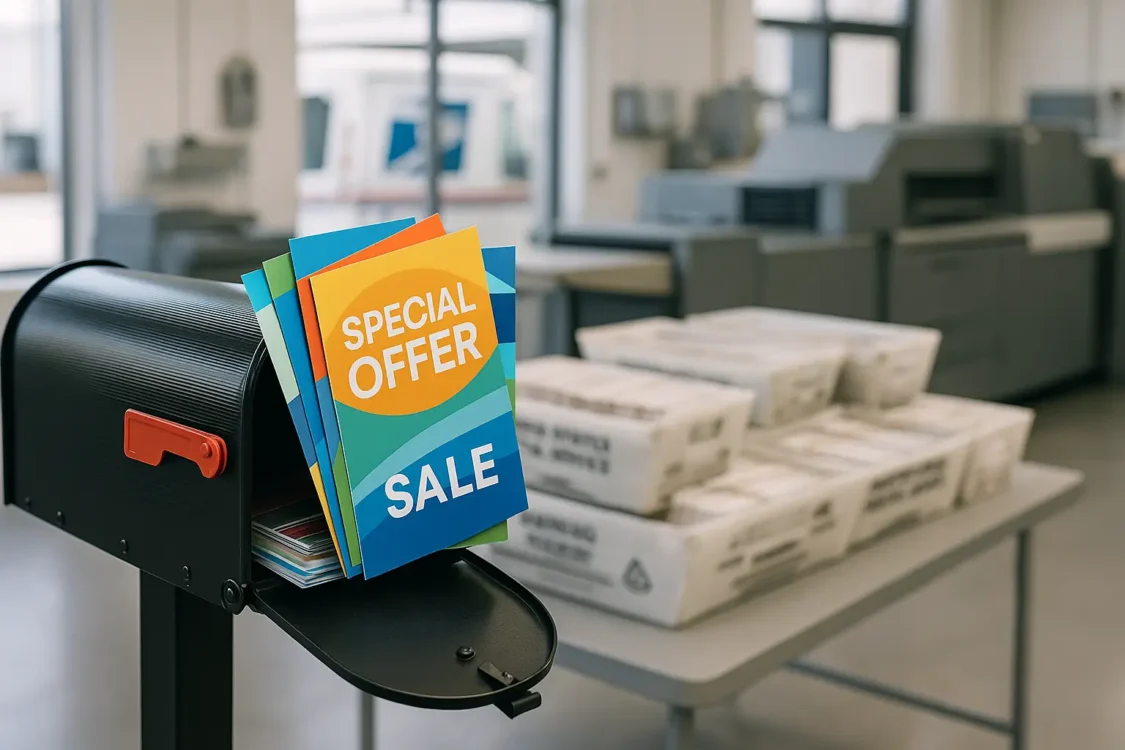
-
- October 17, 2025
More Than Mail: Why the Mailbox is Marketing’s Secret Weapon in 2026
What if the most powerful marketing tool for 2026 wasn’t a new social media app or a complex algorithm, but something you check every day? For years, we’ve been told that direct mail is a thing of the past. A relic. But as our lives get more cluttered with screens, notifications, and digital noise, a funny thing has happened. The physical mailbox is making a huge comeback. 🚀 This isn’t about nostalgia. It’s a smart, strategic shift driven by how we actually live and feel today. The more our world goes digital, the more a real, tangible piece of mail stands out. Let’s dive into why direct mail is not just surviving, but becoming one of the most profitable channels in modern marketing. The Digital Burnout is Real (And Your Mailbox is the Cure) Let’s be honest: we’re all a little tired of our screens. That feeling of being overwhelmed by the constant flood of brand emails, pop-up ads, and social media promotions is called digital fatigue, and it’s a huge problem for marketers. Think about it. We’re hit with thousands of digital ads every single day. We’ve developed “banner blindness” to tune them out, and our trust in what we see online has plummeted. A recent report found that only 38% of consumers actually trust digital ads. In a world drowning in digital noise, the mailbox has become a quiet, curated space. While a brand might be one of 4,000 screaming for your attention online, it’s competing with only a handful of other items in your mailbox. This simple idea—scarcity creates value—is the secret to direct mail’s new power. Its effectiveness grows as the digital world gets louder and more crowded. The Surprising Power of Touch There’s a reason you remember a handwritten note more than a text message. Our brains are wired to respond to physical objects. The simple act of holding a piece of mail creates a stronger connection and a more lasting memory than a fleeting digital ad. The science backs this up. Deeper Engagement: People spend an average of 132 seconds with a piece of direct mail, compared to less than 15 seconds with a digital ad. Longer Lifespan: An email is deleted in a flash, but a mailer can hang around the house for an average of 17 days, creating multiple chances to be seen. Emotional Connection: Brain studies show that physical media activates parts of the brain tied to emotion and memory far more effectively than digital media does. In a world obsessed with speed, direct mail’s “slowness” is its greatest strength. It’s perfect for building trust and keeping your brand top-of-mind for big decisions, a job that fast-paced digital content just can’t do. Guess Who Loves Mail? Gen Z and Millennials. Here’s a plot twist you probably didn’t see coming: the generations that grew up online are the ones most excited about getting physical mail. Far from seeing it as old-fashioned, they view it as more personal, authentic, and trustworthy. The stats are pretty shocking: An incredible 85% of Gen Z and Millennials say they respond to direct mail. 82% of Millennials view print ads as more trustworthy than digital ones. A whopping 75% of Millennials say receiving personal mail makes them feel “special.” ✨ Why? Because they know how cheap and easy it is to send a mass email. When a brand takes the time and money to print and send something physical, it signals that they see the recipient as valuable. For this audience, direct mail is like a formal invitation in a world of casual DMs. It’s a premium touchpoint perfect for welcoming new customers or sharing exclusive offers. The Smart Mailbox: How Tech Reinvented Direct Mail The direct mail of today is a world away from the “junk mail” of the past. It’s now a high-tech, data-driven channel that’s as smart and measurable as any digital campaign. Mail That Knows You (In a Good Way) Thanks to Variable Data Printing (VDP) and Artificial Intelligence (AI), mail can now be personalized for each individual. We’re talking way beyond just adding a name. AI analyzes customer data—like browsing history or past purchases—to customize the images, text, and offers on every single piece. This level of personalization can boost response rates by up to 135%! The Digital Trigger for a Physical Touchpoint One of the coolest innovations is programmatic direct mail. This technology automatically sends a physical mailer based on a real-time digital action. Shopping Cart Abandonment: Someone leaves items in their online cart? A postcard with a picture of that exact product can land on their doorstep a few days later. Website Retargeting: A person browses a specific page on your website? You can automatically send them a relevant brochure. Zogics, an e-commerce company, used this to achieve a stunning 500% ROI. Competitor Conquesting: Using location data, you can even send a mailer to a potential customer right after they visit a competitor’s store. Finally, Proof That Your Mail is Working For years, the biggest knock against direct mail was that it was hard to track. Not anymore. With tools like QR codes, personalized URLs (PURLs), unique coupon codes, and integrated analytics dashboards, you can now measure your ROI with digital-level precision. You can see exactly who opened, who responded, and how much revenue was generated. The Bottom Line: An Unbeatable Return on Investment 💰 At the end of the day, it all comes down to results. And here, the numbers speak for themselves. Direct mail consistently delivers one of the highest ROIs in marketing. A major 2023 report found that direct mail sent to existing customers delivered an average ROI of 161%. That crushed the ROI for both email (44%) and social media (21%). It’s no wonder that 84% of marketers agree that direct mail provides the highest ROI of any channel they use. Just look at these quick examples: An e-commerce retailer turned a $90,000 direct mail spend into $1.5 million
Read More