
-
Mert Bayazitoglu
- February 9, 2026
Direct Mail vs Digital Marketing Lower Your CAC by Escaping Auctions
Direct Mail vs Digital Marketing: Escaping the Auction Trap to Lower CAC Key Takeaways The Digital Ceiling: Digital ad platforms rely on auctions. This means success acts as a penalty—as you scale, your costs inevitably rise. Precision Targeting: Direct mail bypasses algorithmic guessing. It allows you to target exact households based on concrete data instead of “lookalike” behaviors. Economy of Scale: Unlike digital ads, direct mail unit costs decrease as you increase volume, making it the superior channel for high-growth stages. If you manage a growth budget, you know the feeling. You launch a new campaign on social or search. The first two weeks are incredible. The Cost Per Acquisition (CAC) is low, and the leads are flowing. Then, inevitably, the “plateau” hits. To get more volume, you have to broaden your targeting. You have to bid higher to beat competitors. Suddenly, your efficient digital channel isn’t so efficient anymore. You are spending 30% more just to maintain the same results you had last quarter. This is the Auction Trap. While most modern marketing strategies prioritize speed, they often sacrifice efficiency. There is a growing movement among sophisticated growth teams to pivot budget back to a channel that offers stability, scalability, and sanity: Direct Mail. Here is why moving your budget offline might be the smartest digital move you make this year. The Problem with Renting Your Audience When you rely strictly on digital marketing, you are renting access to an audience from a landlord (Google, Meta, LinkedIn) who controls the price. Digital channels operate on auction-based systems. When you are small, you can pick the “low-hanging fruit”—the cheapest, highest-intent clicks. But as you try to scale, several things happen: Inventory is limited: There are only so many people searching for your keyword today. Competition is infinite: If your competitor decides to bid $5 more per click, you lose visibility instantly. Algorithms change: A single update can wipe out your optimization efforts overnight. In this environment, speed is actually a weakness. You are reacting to the market in real-time, often overpaying just to stay visible. Why Direct Mail Wins on Economics Direct mail operates on a fundamentally different economic model than digital ads. It replaces the volatility of bidding with the stability of production. When you launch a direct mail campaign, you aren’t fighting a competitor for a slot in a news feed. You are paying a set price for data, printing, and postage. The Inverse Cost Curve: Why Direct Mail becomes cheaper at scale. The Inverse Cost Curve This is the most critical difference for CFOs and Growth VPs: In Digital: As you scale up, your Cost Per Lead usually increases (due to saturation and competitive bidding). In Direct Mail: As you scale up, your Cost Per Lead usually decreases. Why? Efficiencies of scale. Printing 50,000 postcards costs significantly less per unit than printing 5,000. Postage rates can be optimized at volume. As you grow, your margins get healthier, not tighter. Precision vs Probabilities Digital targeting relies on “probabilistic” data. Algorithms guess that someone might be interested in your product because they visited a similar website or clicked a related post. It is a highly educated guess, but it is still a guess. Direct mail relies on “deterministic” data. Because direct mail requires a physical address, it forces you to slow down and build a list based on reality. You can target specific job titles, home equity levels, recent move-ins, or purchase history. This creates Intentionality. Instead of spraying thousands of digital impressions hoping for a click, you are sending a tangible asset to a curated list of people who match your Ideal Customer Profile (ICP) perfectly. You aren’t paying for impressions on a bot-farm or accidental clicks; you are paying to put your brand in the hands of a qualified prospect. The Myth of “Too Slow” The biggest objection to direct mail is the timeline. “Digital is instant,” people say. “Direct mail takes weeks.” This is true. A proper direct mail campaign involves strategy, design, data hygiene, printing, and logistics. It can take weeks from concept to mailbox. However, speed to market is not the same as speed to conversion. Digital ads are fast to launch but often require months of tweaking, A/B testing, and “learning phases” before they stabilize. Direct mail requires front-loaded effort. But because the targeting is so precise and the medium (physical mail) has a 90% open rate, the impact upon arrival is often immediate and substantial. How to Integrate Direct Mail into a Digital World We aren’t suggesting you turn off your Facebook ads. The magic happens when you combine them. The most effective strategy in 2026 is Programmatic Direct Mail. This involves using direct mail as a retargeting tool: Step 1: A user visits your high-value pricing page but doesn’t convert. Step 2: Instead of stalking them with banner ads they ignore, your system automatically triggers a high-quality postcard or letter to their office or home. Step 3: Three days later, they receive a tangible offer in the mail. This turns a digital signal into a physical connection. Stop Bidding, Start Connecting If your marketing reports are showing higher costs for the same traffic, it is time to diversify your mix. You don’t need to shout louder in a crowded digital room. You need to step out of the room entirely and meet your customers where they actually live: their mailbox. Direct mail gives you back the control that algorithms took away. It allows you to own your audience relationships rather than renting them. Ready to start your direct mail campaign? Don’t rely on outdated formats. We help brands lower CAC and drive revenue with modern direct mail strategies. Visit First Class Marketing Today Frequently Asked Questions (FAQ) Q: Why do digital channels get less efficient over time? A: Because you are competing in auctions where increased competition drives costs up, even if your targeting stays the same. Q: What makes direct mail different from digital targeting? A: You choose exactly
Read More
-
- December 30, 2025
The Tangible Standard: Commercial Printing Services for National Brands
The Tangible Standard: Why Modern Brands Demand Physical Print We live in an economy of pixels. A customer in California can order from a business in New York with a single click. Information moves at the speed of light. But in this rush of digital noise, the human brain still craves something solid. That is why commercial printing services remain the backbone of successful national marketing campaigns. At 1st Class Marketing, we provide commercial grade solutions for businesses across the entire United States. We understand that while digital marketing captures attention, physical print captures the imagination. We do not just put ink on paper. We engineer physical assets that build authority, deepen comprehension, and establish trust for your brand nationwide. The Neuroscience of Ownership Why do you value a physical book more than a digital file? It is not just nostalgia. It is biology. Research into the neuroscience of touch reveals that physical media leaves a deeper footprint in the brain than digital media. The United States Postal Service Office of Inspector General partnered with Temple University to study this phenomenon. They found that physical ads trigger activity in the ventral striatum. This is the part of the brain responsible for value and desirability. When a customer holds your brochure or catalog, their brain begins to feel a subconscious sense of ownership. This “Endowment Effect” makes it harder for them to discard the information. Digital ads do not trigger this same response. You can read the full report on this neurological research here: USPS OIG: Enhancing the Value of Mail The Science of Deep Reading We read differently on screens. When we look at a monitor or phone, we tend to skim. We hunt for keywords rather than absorbing the full message. Paper encourages “deep reading.” This is a state of focused attention where the reader fully comprehends complex information. If you are selling a complicated product or a high value service, you need your customer to focus. According to research cited by Oxford Learning, students and adults consistently show higher comprehension scores when reading on paper versus screens. The physical cues of the page help the brain map out the information. By using professional commercial printing services to produce your detailed sales materials, you are actually helping your customer understand your value proposition better. Review the findings on reading comprehension here: Oxford Learning: Screen vs. Paper Reading Sustainability and Responsibility A common myth is that digital is always greener. The truth is more nuanced. The paper industry is one of the few industries that plants more than it harvests. Paper is a renewable resource. According to the American Forest & Paper Association (AF&PA), paper recycling rates in the United States have remained consistently high, often exceeding 60 percent. The industry is a leader in sustainable forestry and recycling infrastructure. When you print on sustainable stock, you are using a material that is circular by design. We offer a wide range of recycled and certified paper options to ensure your marketing aligns with your environmental goals. See the latest data on paper recycling rates here: American Forest & Paper Association: Sustainability Facts Why Commercial Printing Services Build Trust The internet is crowded with unverified information. Phishing emails and fake websites have made consumers skeptical. Physical print implies legitimacy. Scammers rarely spend the capital to print thousands of high quality brochures or catalogs. Consumers know this instinctively. When you invest in physical materials, you signal that you are a real, established, and trustworthy entity. The Federal Trade Commission (FTC) frequently warns consumers about online fraud. By placing a physical document in your customer’s hands, you bypass the anxiety associated with clicking unknown links. View consumer protection resources here: Federal Trade Commission: Consumer Information Our Nationwide Capabilities We are equipped to handle massive volume without sacrificing the fine details that define premium quality. Here is how our commercial printing services help businesses across the country elevate their image. 1. Advanced Color Precision Your brand colors are your identity. Your corporate red or blue must look exactly the same on a business card as it does on a large presentation folder. We use advanced color management systems to monitor ink density and color balance. This guarantees that your marketing collateral looks identical in every state where you do business. 2. Diverse Paper Stocks and Textures We offer a vast library of paper options to suit any project. Heavy Cover Stock: This provides rigidity and durability. It conveys strength. Gloss and Matte Finishes: We guide you on when to use gloss for popping colors or matte for a sophisticated look. Specialty Textures: We can source unique papers that engage the fingertips and make people pause. 3. Professional Bindery Services The printing is only half the job. The finishing is what turns a stack of paper into a product. Saddle Stitching: We use this for magazines, newsletters, and program guides. Perfect Binding: This creates a flat and square spine for a polished appearance. It is ideal for thick catalogs. Precision Folding: We handle everything from standard letter folds to complex architectural folds for maps. Nationwide Consistency You do not need a printer in every city. You need one partner who can handle it all. At 1st Class Marketing, we combine the capacity of a national manufacturer with the care of a craftsman. We are big enough to handle your largest campaign but focused enough to catch the smallest detail. Whether you are a franchise chain needing uniformity or a corporation launching a new product line, our commercial printing services ensure your assets are perfect every time. Let us handle the production. You handle the growth.
Read More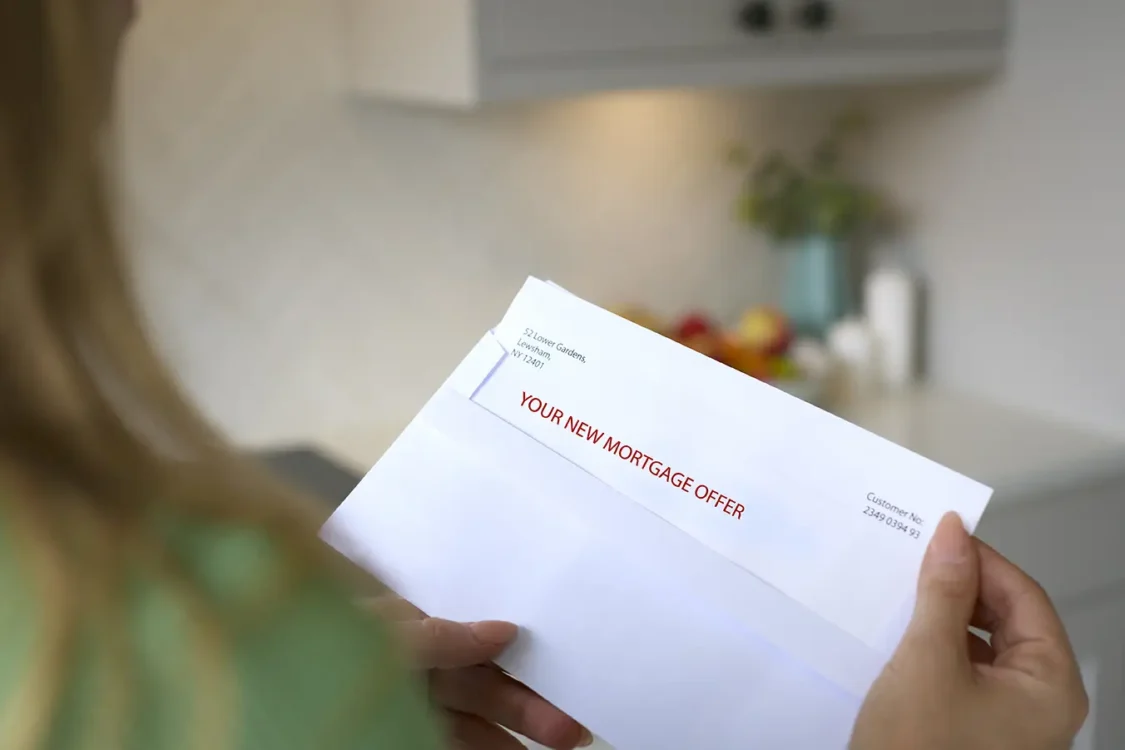
-
- November 10, 2025
Direct Mail for Mortgage Leads: Why It Works in 2025
If your inbox is full of offers for “exclusive” mortgage leads that ten other officers are already calling, you aren’t alone. We talk to lenders every day who are frustrated with the current state of digital marketing. The moment a potential borrower fills out a form online, they are bombarded with calls, texts, and automated emails within seconds. It’s a race to the bottom. Often, the loan doesn’t go to the best LO; it goes to whoever harassed them first. At 1st Class Marketing, we’re seeing a shift. Top-producing brokers and savvy loan officers are pivoting back to a trusted channel that has suddenly become much less crowded: the mailbox. This isn’t about sending generic “junk mail” to everyone in a zip code. It’s about using data to put the right offer in front of a homeowner before they ever start Googling rate tables. Here is why data-driven print marketing is becoming the secret weapon for successful lenders this year. 1. The Mailbox is Quiet (And That’s a Good Thing) Think about your own daily routine. You probably delete dozens of promotional emails every morning without opening them. But you almost certainly look at every single piece of physical mail you get. A well-designed, professional mailer doesn’t have to fight for attention against endless unread notifications. It gets a dedicated moment of your prospect’s time. For a high-trust, high-value transaction like a mortgage, that physical touchpoint gives you a massive credibility advantage over a fleeting Facebook ad. 2. It’s Not “Spray and Pray.” It’s Surgical. Modern direct mail doesn’t mean guessing. It means using data to find the exact borrowers who need you right now. Instead of waiting for someone to search online (where you have to outbid huge national lenders for the click), you can be proactive: Stuck in a high-rate environment? Pivot to HELOC marketing. We can help you target homeowners who have been in their homes for 5+ years and are sitting on significant equity, perfect for funding renovations or debt consolidation. Rates dropping? Don’t just blast everyone. Precisely target borrowers currently holding higher-interest loans who can immediately benefit from a refinance. Farming a new area? Use strategic EDDM (Every Door Direct Mail) to saturate high-value neighborhoods, ensuring you are the brand they recognize when they are ready to move. 3. Impressing Your Referral Partners Real Estate Agents are just as tired of digital spam as borrowers are. If you want to stand out to top-producing agents, a LinkedIn message rarely cuts it anymore. Dropping off a premium, printed presentation folder with high-quality collateral shows you are invested in your business. It signals that you are a professional partner who will take care of their clients, not just another LO looking for a handout. The Verdict: Tangible Marketing Wins Better Clients Digital marketing is obviously necessary, but relying on it 100% leaves you vulnerable to the same rate/lead roller coaster as everyone else. If you want exclusive leads that haven’t already been sold to five other brokerages, it might be time to look offline. Ready to test a campaign that your competitors aren’t doing? At 1st Class Marketing, we specialize in helping lenders navigate data and print production to drive real, funded loans. Reach out today and let’s build a strategy for your market.
Read More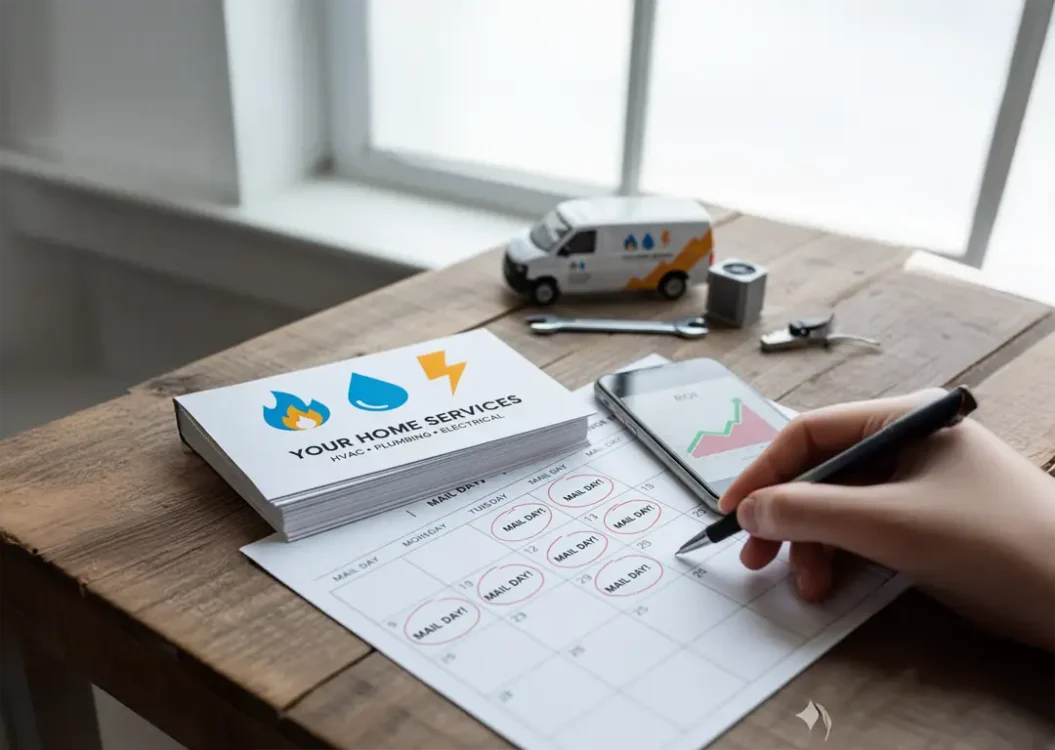
-
- November 7, 2025
HVAC, Plumbing, & Electrical: Does Direct Mail Marketing Actually Work?
You run a great local service company, and you’re thinking about starting a direct mail marketing strategy for your HVAC, plumbing, or electrical business. That’s a smart idea for HVAC marketing or plumbing advertising! But before you spend a dollar on stamps and printing, you need to understand one simple rule about getting customers from the mail. The most important question is: Are you truly ready to send mail more than once? Why a “One-and-Done” Postcard Campaign Fails Your Service Business We talk to owners of HVAC, plumbing, and electrical companies all the time who say, “I just want to send one postcard to see if it works. If I get calls, I’ll send more later.” Here’s the honest truth: Sending only one piece of direct mail is almost always a waste of your money. People don’t call you right away just because they saw your name once. They need to see your company’s name several times before they trust you enough to call you for an important repair or service. A single flyer is easy to ignore, forget, or toss out with the junk mail. If you try it once and don’t get calls, you’ll walk away thinking postcard marketing “doesn’t work,” when the real problem was the plan! The Secret to Success for Direct Mail Marketing HVAC Plumbing Electrical. The only way to make direct mail marketing successful for your business is through repetition and consistency. You need a plan that ensures local homeowners see your company’s name again and again. Why does this work so well for home service businesses? They Need to Remember You: When their furnace breaks, the toilet overflows, or they need an electrician, you want your company to be the first name they remember. Seeing your mail multiple times builds that memory and trust. You Hit Perfect Timing: Most people don’t need a plumber right now. But if you send mail four or six times over a year, you drastically increase the chances that one of your postcards will land in their hands the exact week they do need your service. To see real results and make direct mail profitable, you should plan to send something to the same potential customers at least 3 times, but ideally 6 times or more over a set period. Postcard Marketing: Tips for Stand-Out Design & Simple Messaging It’s not just about how often you mail; it’s also about what you mail and what you say. 1. Change Up the Look Don’t send the same boring piece every time. Keep it fresh by using different kinds of mail: Send a simple paper postcard with a big discount. Send a magnet that they can stick right on the fridge. (Now your number is always visible!) Send a plastic postcard that feels important and is harder to throw away. Using a mix ensures your ads get noticed and aren’t immediately mistaken for the same old junk mail. 2. Keep Your Message Simple When you write your ad, remember that most homeowners aren’t experts. If you use confusing technical words, they might just stop reading. Don’t talk about specs or ratings. Do talk about simple benefits: Focus on what they care about, like “Save Money on Your Electric Bill,” “Fast, Friendly Emergency Plumbing,” or “Reliable HVAC Service.” The clearer your message and the more you focus on helping them, the more calls you’ll get. The Final Verdict on Direct Mail Postcards are a fantastic tool for your HVAC, Plumbing, or Electrical business—but only if you commit to sending them consistently. If you are ready to put a simple, multi-touch plan on the calendar to mail the same homes 3 to 6 times, this direct mail marketing strategy will be a great investment. If you only plan to try it once, save your money!
Read More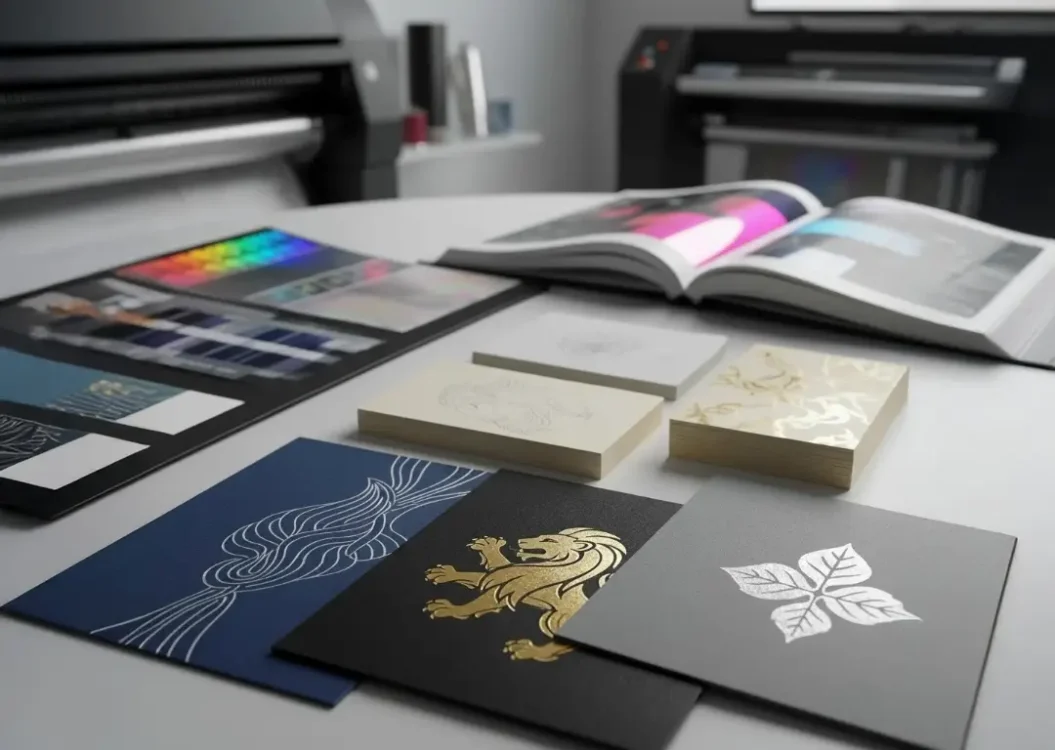
-
- October 29, 2025
Beyond CMYK: How Fifth Color Printing Elevates Your Brand to Unforgettable Heights
In a world overflowing with visual content, how do you make your brand genuinely pop? If you’re still relying solely on standard four-color (CMYK) printing, you might be missing a trick that could transform your projects from great to absolutely unforgettable. Enter Fifth Color Printing – the secret weapon designers and marketers are using to add that extra layer of magic. What Exactly Is Fifth Color Printing? (And Why Should You Care?) Think of CMYK (Cyan, Magenta, Yellow, Black) as your basic palette. It’s fantastic, but sometimes you need a little something extra to truly stand out. Fifth color printing introduces a specialized fifth ink (or even more!) into the process. This isn’t just another shade of blue; these are inks with unique properties that can’t be replicated by mixing CMYK. The Game-Changing Power of Specialty Inks: Dazzling Gold & Silver: Imagine your logo shimmering with real metallic luster. Gold and silver inks add an immediate touch of luxury, prestige, and high value that flat CMYK metallics just can’t match. Brilliant White: Ever tried printing a vibrant photo on dark paper? CMYK colors tend to get lost. White ink acts as a powerful base, allowing vibrant colors to pop brilliantly on black, colored, or even transparent substrates. It can also be used on its own for elegant, subtle designs. Vibrant Neons & Spot Colors: Sometimes, you need a specific, eye-popping color that just isn’t achievable with CMYK. Spot colors (like Pantone-matched hues) ensure brand consistency and vibrancy, while neon inks scream “look at me!” Clear Varnish & Textures: Add a tactile dimension! A clear varnish can highlight specific areas of your design with a glossy, matte, or even textured effect, creating a subtle yet sophisticated contrast. Who Benefits Most from Fifth Color Printing? Luxury Brands: Elevate packaging, invitations, and marketing collateral to match the premium nature of your products. Think high-end jewelry, fashion, real estate, or automotive. Designers & Agencies: Offer clients truly unique and memorable print solutions that set their campaigns apart. Event Planners: Create stunning, personalized invitations and programs that leave a lasting impression for weddings, galas, and corporate events. Small Businesses & Startups: Make a big impact on a smaller budget with eye-catching business cards, loyalty programs, or product tags. Anyone Looking to Stand Out! If you want your printed materials to feel special, memorable, and high-quality, fifth color printing is your answer. The Opportunities Are Endless! Unforgettable Business Cards: Imagine handing over a card with your logo shimmering in gold, or elegant white text on a black background. Stunning Packaging: Make your products leap off the shelf with metallic accents, vibrant colors on dark substrates, or tactile varnishes. Premium Invitations: From weddings to corporate events, an invitation with metallic or spot color elements conveys importance and luxury. Eye-Catching Brochures & Flyers: Ensure your marketing materials don’t just get read, but felt and remembered. Ready to Make Your Projects Shine? In today’s competitive landscape, differentiation is key. Fifth color printing isn’t just about adding another color; it’s about adding impact, perceived value, and an undeniable touch of sophistication. It’s about making your brand not just seen, but truly felt and remembered. Explore the possibilities. Ask your print provider about incorporating white, gold, silver, or other specialty inks into your next project. You might be surprised at how accessible and transformative this “fifth color” can be!
Read More
-
- October 27, 2025
Small Business Sales: 5 Simple Human-Centered Insights to Grow Beyond the Hustle
Why Human-Centered Small Business Sales Works If you’re a small business owner, “sales” can feel like a four-letter word. It’s the mountain you have to climb every single day, often while you’re also being the marketer, the accountant, the customer service rep, and the janitor. The internet is full of “hacks” and “funnels” that promise to triple your revenue overnight. But the truth is, most of this advice feels impersonal, complicated, and just… not you. What if growing your sales wasn’t about aggressive tactics, but about simple, human-centered shifts? What if it was less about “closing” and more about “connecting”? As we move forward, the most successful small businesses are the ones that lean into their greatest advantage: their humanity. Here are 5 key insights that can help you drive real sales growth, just by being human. 1. Stop Pitching, Start Solving We’re often so excited about our product or service that we lead with the features. We talk about what it is. But your customer isn’t buying your features. They’re buying a solution to their problem. They’re buying a feeling. They’re buying a better version of themselves. Before your next sales conversation or social media post, ask yourself: What problem does my customer have right before they start looking for me? What is that problem costing them (in time, money, or peace of mind)? How will their life be better and easier after they use my product? The Insight: Lead with empathy. When you show you understand the problem better than anyone else, you instantly build trust. The sale becomes the natural next step, not a pushy pitch. 2. Your Best New Customer is an Old One In the quest for growth, we’re obsessed with new leads. But acquiring a new customer is 5 to 25 times more expensive than keeping a current one. Your existing customer base is a gold mine. They already trust you. They’ve already seen the value you provide. They are your single greatest source of repeat business and high-quality referrals. The Insight: Shift some of your energy from acquisition to retention. Create a simple loyalty perk. Send a personal thank-you email. Ask for feedback (and act on it). Build a community. A delighted customer is your most powerful and cost-effective sales-person. 3. Ditch the “Brand Voice.” Use Yours. So many small businesses try to sound “professional” and end up sounding like a faceless corporation. They use “we” when it’s just “I.” They use jargon and corporate-speak. Here’s the secret: People don’t connect with logos. They connect with people. Your biggest competitive advantage against the Amazons of the world is you. The Insight: Be a person. Show your face on social media. Tell the story of why you started your business. Write your emails and web copy like you’re talking to a friend. Authenticity builds a connection that big brands can’t fake. 4. Friction is Your Sales Kryptonite Imagine a customer wants to give you money, but they can’t figure out your website. The “buy” button is hidden. The checkout form asks for 20 fields. Your site isn’t mobile-friendly. That’s friction. And every single point of friction is a lost sale. The Insight: Go through your own buying process, from start to finish, on your phone. Is it fast? Is it clear? Is it simple? How many clicks does it really take to buy? Make it insanely easy for people to say “yes.” Remove every unnecessary step, button, and form field. 5. Data Isn’t a Four-Letter Word “Data” and “analytics” can sound intimidating, but it’s really just a compass. You don’t need a data science degree to use it. You’re likely already sitting on a treasure trove of simple, actionable data: Social Media: Which posts get the most comments or shares? That’s what your audience wants to hear about. Do more of that. Website: Which page do people visit most? That’s your most valuable digital real_estate. Make sure it has a clear call to action. E-commerce: Where do people drop off in the checkout process? That’s the exact point of friction you need to fix (see Insight #4). The Insight: You don’t need to track everything. Just pick one or two simple numbers to look at each week. Let the data guide you. Stop guessing what works and start knowing. It’s Not Magic, It’s Focus Growing your sales doesn’t require a personality transplant or a massive budget. It’s about small, consistent shifts. It’s about solving, not selling. It’s about appreciating, not just acquiring. It’s about being you, being clear, and being curious. Growing a business is a journey, and knowing where to focus your energy is half the battle. We hope these insights help clear the path.
Read More
-
- October 24, 2025
Simple Guide to Email Marketing: A 101 for Beginners
Looking for a simple guide to email marketing? If you’ve heard the term “email marketing” but just picture those spammy, all-caps emails you delete every morning, let’s clear the air. Real email marketing isn’t spam. It’s not about shouting at strangers. At its best, email marketing is simply a way to build a relationship with people who actually want to hear from you. It’s like sending a personal letter or a helpful note to a friend, not a random flyer stuffed in their mailbox. If you run a small business, a blog, or a creative project, your email list can become your most valuable asset. But how do you start without feeling salesy or overwhelmed? Welcome to the simple, no-jargon guide to email marketing. Why Bother? (Is Email Even Still a Thing?) Yes! In a world of ever-changing social media algorithms, email is the one thing you truly own. Think of it this way: your social media followers are like “rented” land. The platform (Facebook, Instagram, TikTok) can change the rules, or even shut down, and your audience is gone. Your email list is your “owned” home. You have a direct line to your audience, forever. Here are the three biggest “wins” of email marketing: You Own Your Audience: As mentioned, no algorithm can take your list away from you. It’s Personal: You can segment your audience and send messages to “Jane” about her interest in gardening, instead of just shouting “Hey everyone!” into the void. This personalization builds incredible trust. Amazing ROI (Return on Investment): You don’t need to be a finance guru to understand this. Studies consistently show that for every $1 spent on email marketing, the average return is over $36 (as reported by sources like Litmus). It’s one of the most effective ways to connect with people and grow your business. A 5-Step Simple Guide to Email Marketing Forget the complex flowcharts for now. Here is the entire process in five simple steps. Step 1: Build Your “Guest List” (The Right Way) Before you can send emails, you need people to send them to. The golden rule here is permission. Whatever you do, do not buy an email list. It’s the fastest way to get marked as spam and destroy your reputation. You only want to email people who have asked to hear from you. How do you get them to ask? A Simple Signup Form: Place a form on your website or blog that says, “Join our newsletter for weekly tips.” The “Lead Magnet”: This is the most effective method. A lead magnet is just a simple “freebie” you offer in exchange for an email address. A coffee shop could offer a “10% off your next order” coupon. A blogger could offer a free PDF checklist like “5 Things to Do Before Publishing a Blog Post.” A consultant could offer a “10-minute case study.” Step 2: Choose Your “Mail Carrier” (Your Email Tool) You can’t send thousands of emails from your personal Gmail or Outlook account. You’ll get shut down for spam instantly. You need an Email Service Provider (ESP). Think of this as your professional mail carrier that handles all the heavy lifting for you. It helps you design emails, manage your list, and stay legal. Choosing the right platform is a critical first step. Do you need a simple tool for newsletters, or a powerful engine that can handle complex e-commerce automations? The platform you choose today will determine what you’re capable of tomorrow. This strategic choice is one of the most important first steps we take with our clients. We match your specific business goals to the right technology, ensuring you have a powerful foundation without paying for features you don’t need. Step 3: Write Your First “Letter” (Crafting Your Email) This is the fun part. You don’t need to be a professional copywriter. Just be human. A good email has three parts: A Clear, Honest Subject Line: This is the “envelope.” It’s the one thing that determines if someone opens your email. Don’t use trickery or “clickbait.” Bad Subject: URGENT: OPEN NOW!!! Good Subject: A 5-minute tip for a better-looking lawn A Valuable Body: This is the “letter.” Write like you’re talking to one person. Use short sentences and short paragraphs. Your goal is to provide value. Give them a tip, share an interesting story, or link to a helpful resource. A Single Call-to-Action (CTA): This is the “P.S.” at the end. Tell them the one thing you want them to do next. Don’t give them 10 choices. “Read the full blog post here” “Watch the new video” “Grab the 10% discount” Step 4: Send and Automate (The Magic Part) You generally have two “types” of emails you can send: Campaigns (or Newsletters): These are one-off emails you write and send manually. For example, your weekly newsletter, a special announcement, or a holiday sale. Automations: These are emails that send automatically based on a trigger. The most important one for you to set up is a “Welcome Email.” This is an email that automatically goes out to every new person the moment they subscribe. It confirms their subscription, delivers their freebie (if you offered one), and welcomes them to your community. This is also the part where true email marketing magic happens. A “welcome” email can become a 5-part “nurture sequence” that builds trust and guides a new lead toward their first purchase. Step 5: See Who’s Reading (A Quick Peek at Numbers) Your email tool will give you a report after you send an email. You’ll see a lot of numbers, but you only need to care about two to start: Open Rate: What percentage of people opened your email? This tells you how good your subject line was. Click-Through Rate (CTR): Of the people who opened it, what percentage clicked the link inside? This tells you how valuable your email content was. Understanding these numbers is just step one. Knowing how to improve them—by A/B testing subject lines,
Read More
-
- October 24, 2025
5 Marketing Traps Almost Every New Business Owner Falls Into (And How to Climb Out)
Let’s be real: running your own business is a wild juggling act. You’re the CEO, the product designer, the accountant, and—yep—the entire marketing department. With a to-do list that never ends, it’s so easy to fall into common marketing traps that burn you out and waste precious money. But here’s the good news: you’re not alone, and these mistakes are completely fixable. Marketing isn’t about doing everything at once. It’s about doing the right things for your small business marketing, one step at a time. Does any of this sound familiar? Let’s walk through five common hurdles and, more importantly, how to get over them. Marketing Trap #1: Trying to Sell to “Everyone” When you’ve poured your heart into a product or service, you genuinely believe everyone could benefit from it. I get it! But the hard truth is, when you try to talk to everyone, your message becomes so general that it just gets lost in the noise. It doesn’t connect with anyone. The Fix: Find Your People Stop trying to be the “best” choice for everybody and start being the “only” choice for a specific group. Think about your absolute favorite customer. The one you wish you could clone. Now, let’s build a picture of them: How old are they? Where do they live? What do they really care about? What’s a specific, nagging problem they have that you can solve? Where do they “live” online? (Is it a specific Facebook group? LinkedIn? Instagram?) Once you have this person in your head, just write for them. Your marketing will instantly feel more personal and, in turn, become way more effective. Marketing Trap #2: “Doing Marketing” Without a Goal Ever get to the end of the day, realize you posted on social media, but have no idea if it… did anything? That’s what I call “check-the-box” marketing, and it’s one of the most common marketing traps for new business owners. You’re busy, but you’re not necessarily being effective. How can you know if you’re winning if you never defined what winning looks like? The Fix: Know Your “Why” with SMART Goals Before you spend another minute on a post or an ad, take a breath and ask, “What am I trying to achieve right now?” A simple way to do this is with SMART goals. It sounds “business-y,” but it’s really just common sense: Specific: “I want to grow my email list.” (Clearer than “grow my business.”) Measurable: “I want to get 50 new subscribers.” (You can track this.) Achievable: “50 is a realistic number for me this month.” (Not 5,000.) Relevant: “Email subscribers are great because they often become loyal customers.” Time-bound: “I’ll aim for this by the end of the month.” Now, you’re not just “posting.” You’re running a 30-day campaign to get 50 new subscribers. See the difference? Marketing Trap #3: The “Be Everywhere” Burnout Ever feel like you’re supposed to be on TikTok, Instagram, Facebook, LinkedIn, Pinterest, and also run a blog and a YouTube channel… all at the same time? It’s exhausting. Trying to be everywhere is the fastest path to burnout and, frankly, to creating a lot of mediocre content. The Fix: Pick Your Playground Here’s your permission slip: You don’t have to be everywhere.Go back to that favorite customer we pictured in Mistake #1. Where are they hanging out? If your ideal client is a 50-year-old lawyer, you probably don’t need to stress about TikTok. If you sell beautiful handmade jewelry, Instagram and Pinterest are your best friends. Choose one or two platforms where your people already are and just focus on doing those really well. It’s so much better to be a star in one place than a ghost in seven. Marketing Trap #4: The “All Sales, All the Time” Megaphone Does your social media feed or email newsletter look like a wall of digital coupons? “BUY NOW!” “SALE!” “LIMITED TIME!” If every time you talk to your audience, you’re asking for a sale, you’re training them to tune you out. People want to connect, not just be sold to 24/7. The Fix: Give, Give, Give… Then Ask (The 80/20 Idea) Think of your marketing like a relationship. You wouldn’t ask someone to marry you on the first date, right? You build trust first. 80% of your content: Aim to be genuinely helpful, interesting, or entertaining. Share a tip, answer a common question, show a fun behind-the-scenes moment, or celebrate a customer. Build that trust. Show them you’re an expert who cares. 20% of your content: Now you’ve earned the right to ask. This is in your new offer, your sales pitch, or your call to buy. When people know you’re not just there to sell to them, they’ll be far more open and interested when you finally do. Marketing Trap #5: Chasing New Customers and Forgetting Your Old Ones It’s always exciting to chase and win a brand-new customer. But in that chase, we often forget about the goldmine we’re already sitting on: our existing customers. These are the people who already know, like, and trust you! It’s so much easier (and far cheaper) to get a current customer to buy again than to convince a total stranger. The Fix: Treat Your Current Customers Like VIPs Roll out the red carpet for the people who already support you. Start that email list: This is your direct line to your biggest fans. (If you’re not sure where to start, check out our simple guide to email marketing here). It’s the most valuable marketing tool you can have. Create a simple loyalty program: A small “thank you” discount for their 5th purchase goes a long way. Ask for reviews: Happy customers are usually happy to share! Their words are more powerful than any ad you could write. Try a referral system: “Refer a friend, you both get 10% off.” Let your fans become your best salespeople. You’ve Got This: Small Shifts, Big Results You don’t need a massive budget or a
Read More