-
Mert Bayazitoglu
- February 9, 2026
Direct Mail vs Digital Marketing Lower Your CAC by Escaping Auctions
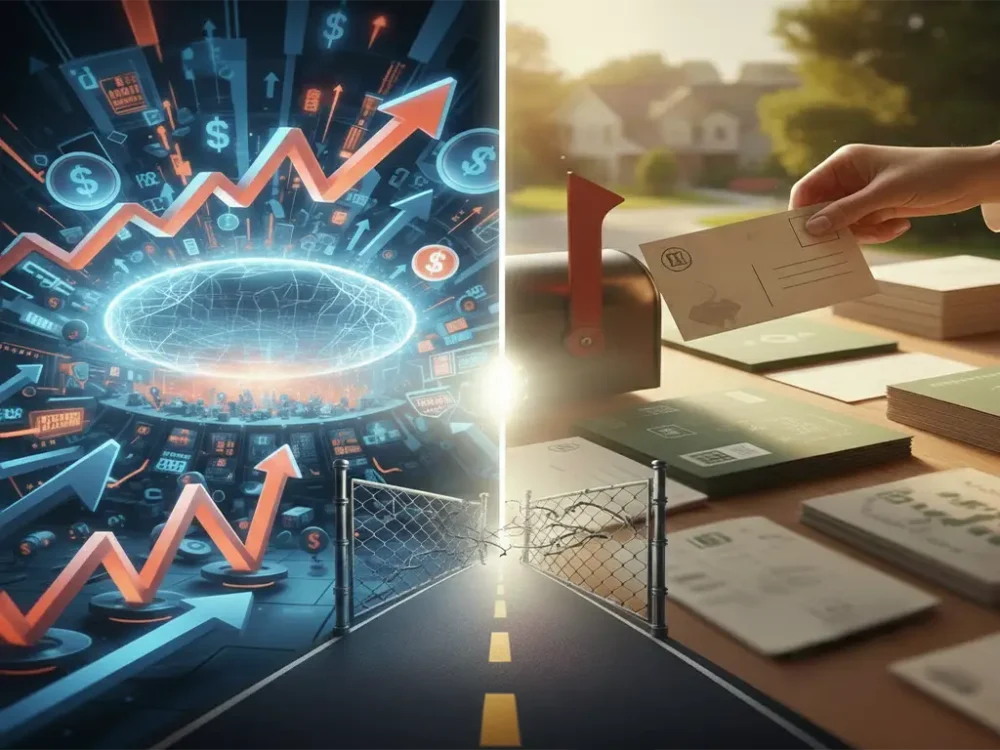
Direct Mail vs Digital Marketing: Escaping the Auction Trap to Lower CAC Key Takeaways The Digital Ceiling: Digital ad platforms rely on auctions. This means success acts as a penalty—as you scale, your costs inevitably rise. Precision Targeting: Direct mail bypasses algorithmic guessing. It allows you to target exact households based on concrete data instead of “lookalike” behaviors. Economy of Scale: Unlike digital ads, direct mail unit costs decrease as you increase volume, making it the superior channel for high-growth stages. If you manage a growth budget, you know the feeling. You launch a new campaign on social or search. The first two weeks are incredible. The Cost Per Acquisition (CAC) is low, and the leads are flowing. Then, inevitably, the “plateau” hits. To get more volume, you have to broaden your targeting. You have to bid higher to beat competitors. Suddenly, your efficient digital channel isn’t so efficient anymore. You are spending 30% more just to maintain the same results you had last quarter. This is the Auction Trap. While most modern marketing strategies prioritize speed, they often sacrifice efficiency. There is a growing movement among sophisticated growth teams to pivot budget back to a channel that offers stability, scalability, and sanity: Direct Mail. Here is why moving your budget offline might be the smartest digital move you make this year. The Problem with Renting Your Audience When you rely strictly on digital marketing, you are renting access to an audience from a landlord (Google, Meta, LinkedIn) who controls the price. Digital channels operate on auction-based systems. When you are small, you can pick the “low-hanging fruit”—the cheapest, highest-intent clicks. But as you try to scale, several things happen: Inventory is limited: There are only so many people searching for your keyword today. Competition is infinite: If your competitor decides to bid $5 more per click, you lose visibility instantly. Algorithms change: A single update can wipe out your optimization efforts overnight. In this environment, speed is actually a weakness. You are reacting to the market in real-time, often overpaying just to stay visible. Why Direct Mail Wins on Economics Direct mail operates on a fundamentally different economic model than digital ads. It replaces the volatility of bidding with the stability of production. When you launch a direct mail campaign, you aren’t fighting a competitor for a slot in a news feed. You are paying a set price for data, printing, and postage. The Inverse Cost Curve: Why Direct Mail becomes cheaper at scale. The Inverse Cost Curve This is the most critical difference for CFOs and Growth VPs: In Digital: As you scale up, your Cost Per Lead usually increases (due to saturation and competitive bidding). In Direct Mail: As you scale up, your Cost Per Lead usually decreases. Why? Efficiencies of scale. Printing 50,000 postcards costs significantly less per unit than printing 5,000. Postage rates can be optimized at volume. As you grow, your margins get healthier, not tighter. Precision vs Probabilities Digital targeting relies on “probabilistic” data. Algorithms guess that someone might be interested in your product because they visited a similar website or clicked a related post. It is a highly educated guess, but it is still a guess. Direct mail relies on “deterministic” data. Because direct mail requires a physical address, it forces you to slow down and build a list based on reality. You can target specific job titles, home equity levels, recent move-ins, or purchase history. This creates Intentionality. Instead of spraying thousands of digital impressions hoping for a click, you are sending a tangible asset to a curated list of people who match your Ideal Customer Profile (ICP) perfectly. You aren’t paying for impressions on a bot-farm or accidental clicks; you are paying to put your brand in the hands of a qualified prospect. The Myth of “Too Slow” The biggest objection to direct mail is the timeline. “Digital is instant,” people say. “Direct mail takes weeks.” This is true. A proper direct mail campaign involves strategy, design, data hygiene, printing, and logistics. It can take weeks from concept to mailbox. However, speed to market is not the same as speed to conversion. Digital ads are fast to launch but often require months of tweaking, A/B testing, and “learning phases” before they stabilize. Direct mail requires front-loaded effort. But because the targeting is so precise and the medium (physical mail) has a 90% open rate, the impact upon arrival is often immediate and substantial. How to Integrate Direct Mail into a Digital World We aren’t suggesting you turn off your Facebook ads. The magic happens when you combine them. The most effective strategy in 2026 is Programmatic Direct Mail. This involves using direct mail as a retargeting tool: Step 1: A user visits your high-value pricing page but doesn’t convert. Step 2: Instead of stalking them with banner ads they ignore, your system automatically triggers a high-quality postcard or letter to their office or home. Step 3: Three days later, they receive a tangible offer in the mail. This turns a digital signal into a physical connection. Stop Bidding, Start Connecting If your marketing reports are showing higher costs for the same traffic, it is time to diversify your mix. You don’t need to shout louder in a crowded digital room. You need to step out of the room entirely and meet your customers where they actually live: their mailbox. Direct mail gives you back the control that algorithms took away. It allows you to own your audience relationships rather than renting them. Ready to start your direct mail campaign? Don’t rely on outdated formats. We help brands lower CAC and drive revenue with modern direct mail strategies. Visit First Class Marketing Today Frequently Asked Questions (FAQ) Q: Why do digital channels get less efficient over time? A: Because you are competing in auctions where increased competition drives costs up, even if your targeting stays the same. Q: What makes direct mail different from digital targeting? A: You choose exactly
Read More
-
- December 15, 2025
Direct Mail Marketing FAQs: Proven Facts You Need in 2026
If you are looking for honest Direct Mail Marketing FAQs in 2026, you are in the right place. The digital inboxes of your customers are noisier than ever, and you might wonder if sending physical letters or postcards still makes sense. The short answer is yes. The long answer is backed by hard data. We have compiled the most critical Direct Mail Marketing FAQs and answered them using the latest industry facts from late 2025 and early 2026 reports. No guesswork. Just the numbers you need to make informed decisions. Top Direct Mail Marketing FAQs: Is it still effective? One of the most common Direct Mail Marketing FAQs we hear is simply: Does it still work? Direct mail is not just effective; it is currently outperforming many digital channels in engagement. The Return on Investment (ROI) for direct mail remains a standout metric. Industry reports from late 2025 indicate that direct mail campaigns can generate an ROI of up to 161%. This performance is driven by “digital fatigue.” With the average person receiving hundreds of emails daily, a physical letter stands out because it is tangible. It occupies real physical space in a home, which leads to our next point about lifespan. How long does a piece of direct mail last compared to email? One of the most compelling statistics in our industry concerns the “lifespan” of a marketing piece. Email Lifespan: Approximately 17 seconds. Direct Mail Lifespan: Approximately 17 days. According to data referenced by leading marketing authorities like Lob and PostGrid, a physical mail piece stays in the home for over two weeks on average. It gets placed on counters, stuck to refrigerators, and shared among household members. This extended shelf life creates multiple opportunities for a brand impression. An email is usually deleted or archived within seconds of being opened. What are the open rates for direct mail vs email? Visibility is the first hurdle in any marketing campaign. If they do not see it, they cannot buy it. Direct Mail Open Rate: Up to 90%. Email Open Rate: Typically 20% to 30%. Almost everyone checks their physical mailbox. Even if a recipient sorts their mail over the recycling bin, they are still touching, scanning, and making a conscious decision about your brand. That specific moment of physical interaction is guaranteed engagement that email simply cannot provide. What is the average response rate for direct mail? Getting a prospect to open the mail is good. Getting them to act is better. The Association of National Advertisers (ANA) and recent 2025 benchmarks place the average response rate for direct mail around 4.4% for prospect lists. When targeting a house list (people who have already bought from you), that rate can jump significantly higher, often reaching 9%. Compare this to digital channels: Direct Mail Response: ~4.4% Email Response: ~0.12% You would need to send exponentially more emails to get the same number of responses you would get from a targeted direct mail campaign. Does direct mail work for younger generations? There is a common misconception that direct mail only works for older demographics. The data suggests the opposite. Younger generations are actually more responsive to mail because it feels novel and trustworthy to them. USPS research has found that 82% of Millennials view print advertisements as more trustworthy than digital ads. Furthermore, 74% of Gen Z consumers prefer physical experiences over digital ones. Because Millennials and Gen Z are digital natives, they are the most skilled at filtering out digital noise. A physical postcard bypasses those digital filters completely. How can I track the results of a direct mail campaign? Direct mail is no longer a “spray and pray” tactic. It is a data focused channel that tracks just as accurately as digital ads. Modern campaigns use several methods to attribute success: QR Codes: Usage is rising. When a customer scans the code, you know exactly who they are and which mail piece convinced them to act. Personalized URLs: You can assign a unique web link to each recipient (e.g., yourwebsite.com/JaneDoe). This offers 100% accurate tracking of who visited your site. Matchback Analysis: This is the gold standard of attribution. After a campaign, you compare your list of mailed records against your list of sales. If Jane Doe got a postcard on Tuesday and bought a product on Thursday, matchback analysis credits that sale to the mail piece. Does combining direct mail with digital marketing help? Absolutely. Direct mail works best when it is part of an omnichannel strategy. Integrating direct mail with digital tactics (like following up a postcard with an email) can boost response rates by 63% or more. Marketers who use this “surround sound” approach report higher website visits and conversion rates. The physical mail piece primes the customer, making them more likely to click when they subsequently see your digital ad or email. Ready to Boost Your ROI? The facts are clear: Direct mail delivers higher open rates, stronger trust, and better response rates than almost any other channel in 2026. If you are ready to get your brand into the hands of your customers, we can help you build a strategy that works. Contact us today to start your campaign Sources for further reading: USPS Delivers: The Future of Direct Mail Lob: State of Direct Mail Reports ANA: Response Rate Reports
Read More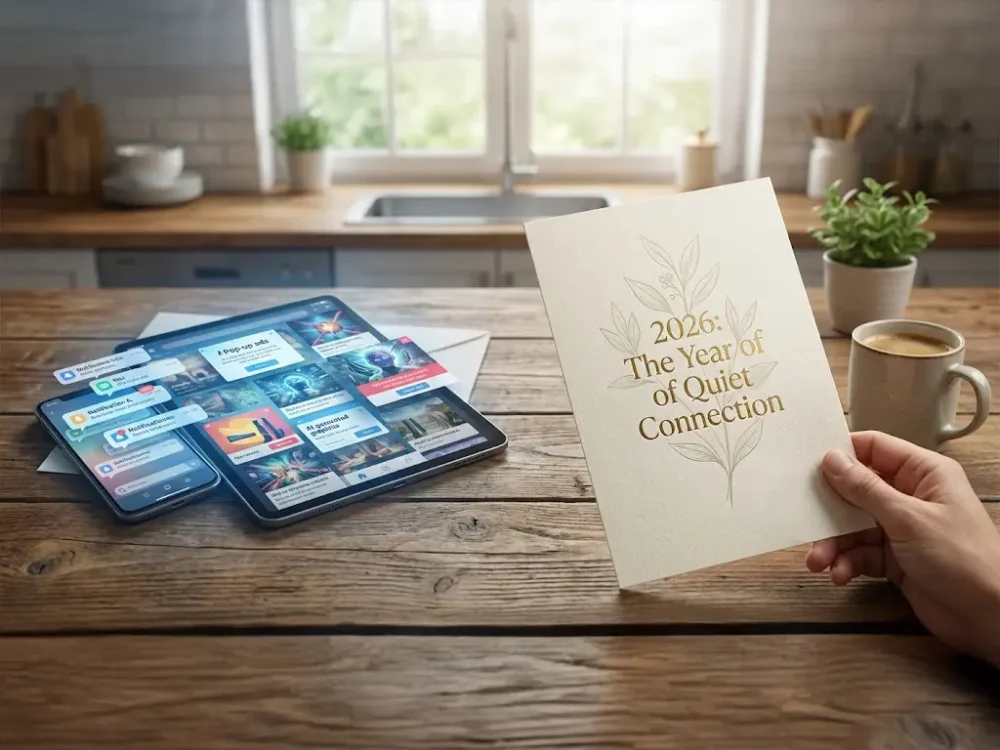
-
- December 8, 2025
2025: The Year We Finally Logged Off (And Why That’s Good for Business)
Marketing Trends 2026: The Year We Finally Logged Off If you found this article while furiously scrolling on your phone between meetings, stop for a second. Take a deep breath. Do you feel that? That quiet hum of anxiety? You are not alone. As we close out the year, the biggest story is not about a new app or faster AI. It is about exhaustion. If you look at the major Marketing Trends 2026 is predicting, they all point to one massive shift. The world is loud, and your customers are looking for a little bit of quiet. At First Class Marketing, we have seen the shift firsthand. 2025 was the year of “The Great Digital Detox.” It was the year we got tired of being pinged, dinged, and notified. So where do we go from here? The answer might surprise you. It is not found in the Metaverse. It is found in the mailbox. Why Marketing Trends 2026 Are Old School For the last decade, marketers have been shouting that digital is faster and cheaper. But they forgot to ask if digital is better. This year, the data finally caught up to the feeling we have all had. Reports on marketing fatigue show that consumers are actively tuning out digital ads because they feel intrusive and overwhelming. We are seeing a “Quiet Revolution.” People are craving things that are real, permanent, and slow. Here is why the smartest brands are pivoting back to print in the new year. 1. The Craving for Realness Let us be honest. The internet got weird this year. Between deepfakes and AI generated bots, it is getting harder to know what is real. This has created a massive Trust Gap. When you send a physical letter, you bridge that gap. You are proving you exist. You are proving you cared enough to pay for postage. Recent studies confirm this, showing that over 60% of consumers trust print ads more than the digital ads that chase them around the web. In 2026, paper is not just paper. It is a handshake. 2. Marketing You Can Feel Think about the last email you received. Do you remember it? Probably not. Now think about a wedding invitation on thick, textured cardstock. You remember the weight of it. That is not an accident. It is biology. Neuroscience tells us that holding something beautiful feels like a gift to the brain, requiring less cognitive effort to understand than a flashing screen. When you use premium textures like the soft touch finishes we use here in Twinsburg, you are not just sending information. You are creating a feeling. 3. The Kitchen Counter Sanctuary There is one place where the Google Algorithm cannot reach you. Your kitchen counter. We call this the Sanctuary. When a family sorts their mail, it is usually a quiet ritual. If your piece is beautiful, useful, or funny, it earns a spot on the fridge. It stays there for weeks. While your competitors are fighting for 3 seconds of attention on TikTok, you are part of the family dinner for 17 days. How to Be Human in 2026 If you want to ride the wave of these Marketing Trends 2026, you do not need a bigger tech stack. You need more empathy. Here is how to humanize your strategy starting January 1st: Stop Blasting and Start Writing. Do not treat your mailing list like targets. Treat them like neighbors. Write copy that sounds like it came from a person, not a department. Give Value instead of Just Asks. Instead of just sending coupons, send something useful. A printed calendar of local 2026 events or a checklist for home maintenance will give them a reason to keep you around. Combine the Best of Both Worlds. We are not saying to delete your website. We are saying to use print to drive people there. A beautiful postcard with a QR code is the perfect bridge between the tactile and the digital. A Prediction for the New Year The screen is not going away. But its power over us is breaking. We believe 2026 will be the year of Reconnection. The businesses that win will not be the ones that shout the loudest. They will be the ones that respect their customers’ time, peace, and intelligence. At First Class Marketing, we help you make that connection. Whether it is a handwritten note or a stunning brochure, we build things that people want to hold onto. Ready to start a real conversation? Contact us today.
Read More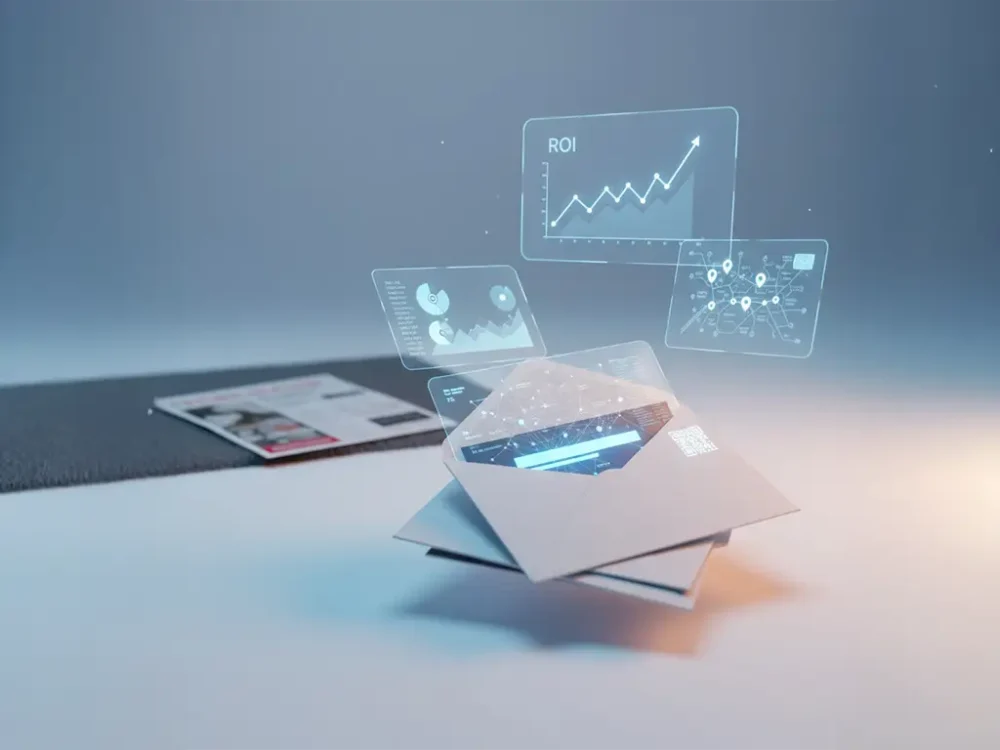
-
- November 12, 2025
Direct Mail Trends 2026: 9 Ways to Win the Mailbox (and Budget)
It’s been a wild ride, and as we look back on 2025, the most important direct mail trends 2026 are already clear. Direct mail is back, but it doesn’t look anything like it used to. The conversation is no longer about “shiny new objects.” It’s about practical, powerful tools that make our mailers faster, smarter, and easier to track. The game-changers of 2025 were all about improving speed, relevance, and knowing what actually worked. As we plan for 2026, the mantra is simple: Test faster, attribute cleanly, and only scale what the data proves. Here’s a breakdown of the trends that defined this year and what to focus on for the next. 1. Personalization: Finally More Than Just a Name What We Saw in 2025: We finally moved past just slapping a [First Name] on a letter. True personalization meant changing the entire piece (offers, hero images, and even layouts) to match the audience. The teams who won? They didn’t go crazy. They limited variables to the 3-4 that really mattered, like the offer and headline, to keep costs and errors down. What to Carry into 2026: Keep it simple and smart. Focus on tighter audience segments and create templated designs that let you “snap in” specific elements, rather than reinventing the wheel every time. Anchor your personalization to real customer-journey moments, like onboarding or reactivation, not just a generic blast. How to Apply It: Start with 3-5 of your core customer segments and 1-2 offers for each. Track your responses meticulously. When you find a winner, scale it. 2. Your New Co-Worker: AI in the Mail Workflow What We Saw in 2025: AI became a standard-issue toolkit for getting things done. It’s now routinely used for writing first draft copy, brainstorming creative versions, modeling better lists, and catching errors before they go to print. The best teams used AI as a “junior associate,” giving it brand style guides and building in human checkpoints to keep everything on-brand. What to Carry into 2026: Build “guardrails” for your AI. This means creating on-brand prompts, setting tone presets, and having clear approval workflows. Use it for the heavy lifting, like cleaning lists (deduping, anomaly detection) after your basic hygiene, and for routine pre-print checks for fonts, barcodes, and safe areas. How to Apply It: Use AI for ideation and first drafts, but always have a human finalize the creative. And automate a preflight checklist to let AI catch the preventable, costly mistakes. 3. 3D & Dimensional Mail: Big “Wow,” Big Budget What We Saw in 2025: Nothing gets attention like a lumpy, bumpy box or a creative pop-up. Dimensional mail proved its stopping power yet again, but the cost is no joke. The ROI was strongest when the customer lifetime value (LTV) justified the spend, especially for high value B2B or luxury clients. What to Carry into 2026: Keep this in your back pocket for your “whale” segments or account-based marketing (ABM) lists. The best pieces are engineered to have inserts or nested components that make the recipient slow down and engage. And please, pair it with a QR code or NFC tap for a frictionless next step. 4. Triggered Mail: From Digital Click to Mailbox “Thud” What We Saw in 2025: This is where things got really smart. We finally matured the pipeline from online signals (like browsing, abandoning a cart, or making a purchase) to a triggered physical mailer. We’re now measuring turnaround in days, not weeks. We also learned that relevance (like mailing about the specific category they browsed) mattered more than just pure speed. What to Carry into 2026: Focus on the triggers that actually create new sales, not just reward people who were buying anyway. Use template libraries that can pull in the exact product image they looked at. And most importantly, keep a “control group” that doesn’t get the mailer so you can prove its true value. How to Apply It: Start with a simple “carted” or “viewed” event. Cap the frequency (don’t be creepy) and attribute every mailer with a unique offer code or URL. 5. Your Mailbox & Inbox, Holding Hands (Thanks, USPS) What We Saw in 2025: USPS Informed Delivery® became a non-negotiable part of the plan. With millions and millions of users, this free service gives you a ride-along email impression with a clickable link, often before the physical piece even lands. It’s a free digital touchpoint. What to Carry into 2026: Tighter creative alignment is key. The Informed Delivery email, the physical mailer, and the landing page should all look and feel like part of the same campaign. Keep testing when to send the email: before the mail arrives (as a teaser) or the day it hits (as a reminder). 6. AR & Interactive: When Gimmicks Become Tools What We Saw in 2025: Augmented Reality (AR), video in print, and scannable chips are still niche, but they found their place. They worked best when they solved a real problem, like an AR filter that lets you “see” a couch in your living room. USPS postage promotions also helped take the sting out of the cost for pilot programs. What to Carry into 2026: Focus on utility over gimmick. Use interactive elements for product demos or guided tours. And make the activation obvious, like a big QR code or a “Tap Here” icon, with a payoff that happens in seconds. 7. Design Rules That Just Plain Work This isn’t a “trend” so much as a timeless truth. The best-performing creative in 2025 stuck to the fundamentals. Give each side of the mailer one job. Write a headline that sells the value, not the product. Use scannable bullets, not a wall of text. Use whitespace as a design element. Don’t crowd the piece. Personalize sparingly and with purpose. 8. Data Discipline: The Unsexy Trend That Wins Championships What We Saw in 2025: All the fancy creative in the world doesn’t matter if you’re sending it to the wrong person. The best teams
Read More
-
- November 10, 2025
Direct Mail for Mortgage Leads: Why It Works in 2025
If your inbox is full of offers for “exclusive” mortgage leads that ten other officers are already calling, you aren’t alone. We talk to lenders every day who are frustrated with the current state of digital marketing. The moment a potential borrower fills out a form online, they are bombarded with calls, texts, and automated emails within seconds. It’s a race to the bottom. Often, the loan doesn’t go to the best LO; it goes to whoever harassed them first. At 1st Class Marketing, we’re seeing a shift. Top-producing brokers and savvy loan officers are pivoting back to a trusted channel that has suddenly become much less crowded: the mailbox. This isn’t about sending generic “junk mail” to everyone in a zip code. It’s about using data to put the right offer in front of a homeowner before they ever start Googling rate tables. Here is why data-driven print marketing is becoming the secret weapon for successful lenders this year. 1. The Mailbox is Quiet (And That’s a Good Thing) Think about your own daily routine. You probably delete dozens of promotional emails every morning without opening them. But you almost certainly look at every single piece of physical mail you get. A well-designed, professional mailer doesn’t have to fight for attention against endless unread notifications. It gets a dedicated moment of your prospect’s time. For a high-trust, high-value transaction like a mortgage, that physical touchpoint gives you a massive credibility advantage over a fleeting Facebook ad. 2. It’s Not “Spray and Pray.” It’s Surgical. Modern direct mail doesn’t mean guessing. It means using data to find the exact borrowers who need you right now. Instead of waiting for someone to search online (where you have to outbid huge national lenders for the click), you can be proactive: Stuck in a high-rate environment? Pivot to HELOC marketing. We can help you target homeowners who have been in their homes for 5+ years and are sitting on significant equity, perfect for funding renovations or debt consolidation. Rates dropping? Don’t just blast everyone. Precisely target borrowers currently holding higher-interest loans who can immediately benefit from a refinance. Farming a new area? Use strategic EDDM (Every Door Direct Mail) to saturate high-value neighborhoods, ensuring you are the brand they recognize when they are ready to move. 3. Impressing Your Referral Partners Real Estate Agents are just as tired of digital spam as borrowers are. If you want to stand out to top-producing agents, a LinkedIn message rarely cuts it anymore. Dropping off a premium, printed presentation folder with high-quality collateral shows you are invested in your business. It signals that you are a professional partner who will take care of their clients, not just another LO looking for a handout. The Verdict: Tangible Marketing Wins Better Clients Digital marketing is obviously necessary, but relying on it 100% leaves you vulnerable to the same rate/lead roller coaster as everyone else. If you want exclusive leads that haven’t already been sold to five other brokerages, it might be time to look offline. Ready to test a campaign that your competitors aren’t doing? At 1st Class Marketing, we specialize in helping lenders navigate data and print production to drive real, funded loans. Reach out today and let’s build a strategy for your market.
Read More
-
- November 7, 2025
HVAC, Plumbing, & Electrical: Does Direct Mail Marketing Actually Work?
You run a great local service company, and you’re thinking about starting a direct mail marketing strategy for your HVAC, plumbing, or electrical business. That’s a smart idea for HVAC marketing or plumbing advertising! But before you spend a dollar on stamps and printing, you need to understand one simple rule about getting customers from the mail. The most important question is: Are you truly ready to send mail more than once? Why a “One-and-Done” Postcard Campaign Fails Your Service Business We talk to owners of HVAC, plumbing, and electrical companies all the time who say, “I just want to send one postcard to see if it works. If I get calls, I’ll send more later.” Here’s the honest truth: Sending only one piece of direct mail is almost always a waste of your money. People don’t call you right away just because they saw your name once. They need to see your company’s name several times before they trust you enough to call you for an important repair or service. A single flyer is easy to ignore, forget, or toss out with the junk mail. If you try it once and don’t get calls, you’ll walk away thinking postcard marketing “doesn’t work,” when the real problem was the plan! The Secret to Success for Direct Mail Marketing HVAC Plumbing Electrical. The only way to make direct mail marketing successful for your business is through repetition and consistency. You need a plan that ensures local homeowners see your company’s name again and again. Why does this work so well for home service businesses? They Need to Remember You: When their furnace breaks, the toilet overflows, or they need an electrician, you want your company to be the first name they remember. Seeing your mail multiple times builds that memory and trust. You Hit Perfect Timing: Most people don’t need a plumber right now. But if you send mail four or six times over a year, you drastically increase the chances that one of your postcards will land in their hands the exact week they do need your service. To see real results and make direct mail profitable, you should plan to send something to the same potential customers at least 3 times, but ideally 6 times or more over a set period. Postcard Marketing: Tips for Stand-Out Design & Simple Messaging It’s not just about how often you mail; it’s also about what you mail and what you say. 1. Change Up the Look Don’t send the same boring piece every time. Keep it fresh by using different kinds of mail: Send a simple paper postcard with a big discount. Send a magnet that they can stick right on the fridge. (Now your number is always visible!) Send a plastic postcard that feels important and is harder to throw away. Using a mix ensures your ads get noticed and aren’t immediately mistaken for the same old junk mail. 2. Keep Your Message Simple When you write your ad, remember that most homeowners aren’t experts. If you use confusing technical words, they might just stop reading. Don’t talk about specs or ratings. Do talk about simple benefits: Focus on what they care about, like “Save Money on Your Electric Bill,” “Fast, Friendly Emergency Plumbing,” or “Reliable HVAC Service.” The clearer your message and the more you focus on helping them, the more calls you’ll get. The Final Verdict on Direct Mail Postcards are a fantastic tool for your HVAC, Plumbing, or Electrical business—but only if you commit to sending them consistently. If you are ready to put a simple, multi-touch plan on the calendar to mail the same homes 3 to 6 times, this direct mail marketing strategy will be a great investment. If you only plan to try it once, save your money!
Read More
-
- October 17, 2025
More Than Mail: Why the Mailbox is Marketing’s Secret Weapon in 2026
What if the most powerful marketing tool for 2026 wasn’t a new social media app or a complex algorithm, but something you check every day? For years, we’ve been told that direct mail is a thing of the past. A relic. But as our lives get more cluttered with screens, notifications, and digital noise, a funny thing has happened. The physical mailbox is making a huge comeback. 🚀 This isn’t about nostalgia. It’s a smart, strategic shift driven by how we actually live and feel today. The more our world goes digital, the more a real, tangible piece of mail stands out. Let’s dive into why direct mail is not just surviving, but becoming one of the most profitable channels in modern marketing. The Digital Burnout is Real (And Your Mailbox is the Cure) Let’s be honest: we’re all a little tired of our screens. That feeling of being overwhelmed by the constant flood of brand emails, pop-up ads, and social media promotions is called digital fatigue, and it’s a huge problem for marketers. Think about it. We’re hit with thousands of digital ads every single day. We’ve developed “banner blindness” to tune them out, and our trust in what we see online has plummeted. A recent report found that only 38% of consumers actually trust digital ads. In a world drowning in digital noise, the mailbox has become a quiet, curated space. While a brand might be one of 4,000 screaming for your attention online, it’s competing with only a handful of other items in your mailbox. This simple idea—scarcity creates value—is the secret to direct mail’s new power. Its effectiveness grows as the digital world gets louder and more crowded. The Surprising Power of Touch There’s a reason you remember a handwritten note more than a text message. Our brains are wired to respond to physical objects. The simple act of holding a piece of mail creates a stronger connection and a more lasting memory than a fleeting digital ad. The science backs this up. Deeper Engagement: People spend an average of 132 seconds with a piece of direct mail, compared to less than 15 seconds with a digital ad. Longer Lifespan: An email is deleted in a flash, but a mailer can hang around the house for an average of 17 days, creating multiple chances to be seen. Emotional Connection: Brain studies show that physical media activates parts of the brain tied to emotion and memory far more effectively than digital media does. In a world obsessed with speed, direct mail’s “slowness” is its greatest strength. It’s perfect for building trust and keeping your brand top-of-mind for big decisions, a job that fast-paced digital content just can’t do. Guess Who Loves Mail? Gen Z and Millennials. Here’s a plot twist you probably didn’t see coming: the generations that grew up online are the ones most excited about getting physical mail. Far from seeing it as old-fashioned, they view it as more personal, authentic, and trustworthy. The stats are pretty shocking: An incredible 85% of Gen Z and Millennials say they respond to direct mail. 82% of Millennials view print ads as more trustworthy than digital ones. A whopping 75% of Millennials say receiving personal mail makes them feel “special.” ✨ Why? Because they know how cheap and easy it is to send a mass email. When a brand takes the time and money to print and send something physical, it signals that they see the recipient as valuable. For this audience, direct mail is like a formal invitation in a world of casual DMs. It’s a premium touchpoint perfect for welcoming new customers or sharing exclusive offers. The Smart Mailbox: How Tech Reinvented Direct Mail The direct mail of today is a world away from the “junk mail” of the past. It’s now a high-tech, data-driven channel that’s as smart and measurable as any digital campaign. Mail That Knows You (In a Good Way) Thanks to Variable Data Printing (VDP) and Artificial Intelligence (AI), mail can now be personalized for each individual. We’re talking way beyond just adding a name. AI analyzes customer data—like browsing history or past purchases—to customize the images, text, and offers on every single piece. This level of personalization can boost response rates by up to 135%! The Digital Trigger for a Physical Touchpoint One of the coolest innovations is programmatic direct mail. This technology automatically sends a physical mailer based on a real-time digital action. Shopping Cart Abandonment: Someone leaves items in their online cart? A postcard with a picture of that exact product can land on their doorstep a few days later. Website Retargeting: A person browses a specific page on your website? You can automatically send them a relevant brochure. Zogics, an e-commerce company, used this to achieve a stunning 500% ROI. Competitor Conquesting: Using location data, you can even send a mailer to a potential customer right after they visit a competitor’s store. Finally, Proof That Your Mail is Working For years, the biggest knock against direct mail was that it was hard to track. Not anymore. With tools like QR codes, personalized URLs (PURLs), unique coupon codes, and integrated analytics dashboards, you can now measure your ROI with digital-level precision. You can see exactly who opened, who responded, and how much revenue was generated. The Bottom Line: An Unbeatable Return on Investment 💰 At the end of the day, it all comes down to results. And here, the numbers speak for themselves. Direct mail consistently delivers one of the highest ROIs in marketing. A major 2023 report found that direct mail sent to existing customers delivered an average ROI of 161%. That crushed the ROI for both email (44%) and social media (21%). It’s no wonder that 84% of marketers agree that direct mail provides the highest ROI of any channel they use. Just look at these quick examples: An e-commerce retailer turned a $90,000 direct mail spend into $1.5 million
Read More