-
Mert Bayazitoglu
- January 20, 2026
3 Ways Dynamic QR Codes Are Reshaping Direct Mail ROI
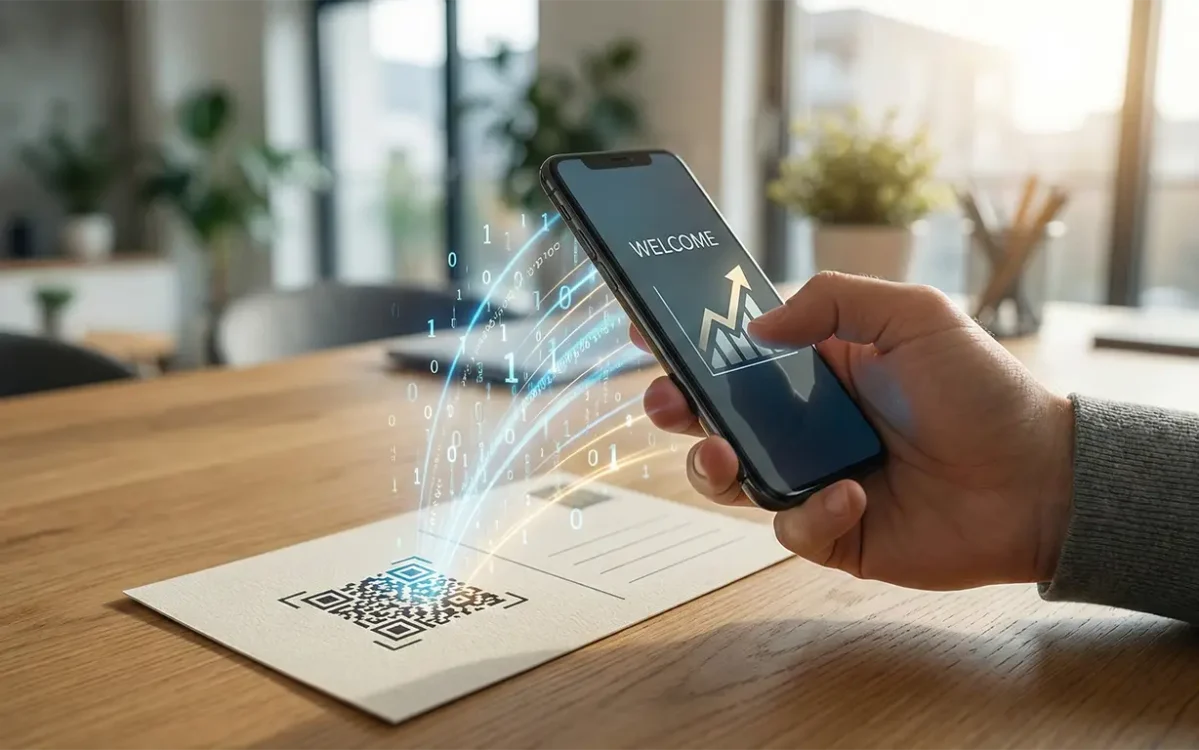
Dynamic QR codes are the single biggest upgrade to direct mail marketing in the last decade. Let’s be honest, for years the biggest criticism of direct mail was the “attribution gap.” You knew your mailers were driving business because the phone would ring or foot traffic would spike, but unless the customer physically brought the coupon into the store, tracking the exact ROI felt like a guessing game. That is where the “Phygital” strategy comes in. It sounds like a buzzword, but Phygital (Physical + Digital) is just the necessary evolution of print. By integrating dynamic QR codes into your physical mail, you turn a static piece of paper into an interactive gateway. According to the 2025 State of Direct Mail Report by Lob, 82% of businesses increased their direct mail budgets specifically because of better integration with digital tools. Here is why dynamic QR codes are the secret weapon for modern campaigns and why you should never print a static code again. The “Oops” Insurance Imagine you print 10,000 postcards. They hit the mail stream, and suddenly you realize the landing page URL is broken, or your special offer has changed from 10% to 15%. With a standard static code, you are out of luck. That paper is already printed. But with dynamic QR codes, you remain in control. You can change the destination URL after the mail has been printed and delivered. You can update the landing page, switch the offer, or redirect traffic to a “Sold Out” page without ever changing the physical pixel pattern on the paper. It is flexibility that print has never had before, which is why dynamic codes captured 65% of the global market share in 2024. Analytics That Rival Digital Ads The old way of tracking mail involved asking, “How did you hear about us?” The new way involves hard data. When a prospect scans dynamic QR codes on your mailer, you don’t just get a site visit. Depending on your setup, you can track the exact scan time to know when your mail hits homes, the geographic location to see which neighborhoods are engaging, and even the device type. Knowing if your customers are on iPhone or Android helps you optimize your mobile experience instantly. This data is crucial because direct mail now boasts an average response rate of 2.7% to 4.4%, compared to email’s average of just 0.12%, according to the latest ANA Response Rate Report. The Retargeting Loop This is the most advanced play in the book. A user scans your mailer but doesn’t buy immediately. Because they visited your site via that specific digital gateway, you can tag them with a tracking pixel like a Meta Pixel or Google Tag. Now you can serve digital ads to the exact people who held your mailer in their hands. This multi-channel approach is proven to work. Response rates can jump to 27% when direct mail is paired with digital follow-up because you are reinforcing the physical message with a digital reminder. The Bottom Line Direct mail is powerful because it demands tactile attention. Digital marketing is powerful because it offers instant conversion. When you merge them using dynamic QR codes, you stop choosing between traditional and modern marketing and start getting the best of both worlds. What is the difference between a static and a dynamic QR code? A static QR code has a fixed URL embedded directly into the pattern; once printed, it cannot be changed. A dynamic QR code points to a redirect server first, allowing you to change the final destination URL anytime without reprinting the physical code. Can you track who scans a direct mail QR code? Yes. While you cannot identify the specific person by name without them filling out a form, dynamic QR codes allow you to track the number of scans, the time of the scan, the geographic location (city/state), and the device type used. How do QR codes help with retargeting ads? When a user scans a dynamic QR code, they land on your website where a tracking pixel (such as Meta Pixel or Google Tag) can be triggered. This allows you to serve digital ads specifically to the people who engaged with your physical mail piece.
Read More
-
- October 27, 2025
Small Business Sales: 5 Simple Human-Centered Insights to Grow Beyond the Hustle
Why Human-Centered Small Business Sales Works If you’re a small business owner, “sales” can feel like a four-letter word. It’s the mountain you have to climb every single day, often while you’re also being the marketer, the accountant, the customer service rep, and the janitor. The internet is full of “hacks” and “funnels” that promise to triple your revenue overnight. But the truth is, most of this advice feels impersonal, complicated, and just… not you. What if growing your sales wasn’t about aggressive tactics, but about simple, human-centered shifts? What if it was less about “closing” and more about “connecting”? As we move forward, the most successful small businesses are the ones that lean into their greatest advantage: their humanity. Here are 5 key insights that can help you drive real sales growth, just by being human. 1. Stop Pitching, Start Solving We’re often so excited about our product or service that we lead with the features. We talk about what it is. But your customer isn’t buying your features. They’re buying a solution to their problem. They’re buying a feeling. They’re buying a better version of themselves. Before your next sales conversation or social media post, ask yourself: What problem does my customer have right before they start looking for me? What is that problem costing them (in time, money, or peace of mind)? How will their life be better and easier after they use my product? The Insight: Lead with empathy. When you show you understand the problem better than anyone else, you instantly build trust. The sale becomes the natural next step, not a pushy pitch. 2. Your Best New Customer is an Old One In the quest for growth, we’re obsessed with new leads. But acquiring a new customer is 5 to 25 times more expensive than keeping a current one. Your existing customer base is a gold mine. They already trust you. They’ve already seen the value you provide. They are your single greatest source of repeat business and high-quality referrals. The Insight: Shift some of your energy from acquisition to retention. Create a simple loyalty perk. Send a personal thank-you email. Ask for feedback (and act on it). Build a community. A delighted customer is your most powerful and cost-effective sales-person. 3. Ditch the “Brand Voice.” Use Yours. So many small businesses try to sound “professional” and end up sounding like a faceless corporation. They use “we” when it’s just “I.” They use jargon and corporate-speak. Here’s the secret: People don’t connect with logos. They connect with people. Your biggest competitive advantage against the Amazons of the world is you. The Insight: Be a person. Show your face on social media. Tell the story of why you started your business. Write your emails and web copy like you’re talking to a friend. Authenticity builds a connection that big brands can’t fake. 4. Friction is Your Sales Kryptonite Imagine a customer wants to give you money, but they can’t figure out your website. The “buy” button is hidden. The checkout form asks for 20 fields. Your site isn’t mobile-friendly. That’s friction. And every single point of friction is a lost sale. The Insight: Go through your own buying process, from start to finish, on your phone. Is it fast? Is it clear? Is it simple? How many clicks does it really take to buy? Make it insanely easy for people to say “yes.” Remove every unnecessary step, button, and form field. 5. Data Isn’t a Four-Letter Word “Data” and “analytics” can sound intimidating, but it’s really just a compass. You don’t need a data science degree to use it. You’re likely already sitting on a treasure trove of simple, actionable data: Social Media: Which posts get the most comments or shares? That’s what your audience wants to hear about. Do more of that. Website: Which page do people visit most? That’s your most valuable digital real_estate. Make sure it has a clear call to action. E-commerce: Where do people drop off in the checkout process? That’s the exact point of friction you need to fix (see Insight #4). The Insight: You don’t need to track everything. Just pick one or two simple numbers to look at each week. Let the data guide you. Stop guessing what works and start knowing. It’s Not Magic, It’s Focus Growing your sales doesn’t require a personality transplant or a massive budget. It’s about small, consistent shifts. It’s about solving, not selling. It’s about appreciating, not just acquiring. It’s about being you, being clear, and being curious. Growing a business is a journey, and knowing where to focus your energy is half the battle. We hope these insights help clear the path.
Read More